
AI exposure means an AI system may be able to perform or assist with some tasks in your work. It signals possible task change, not a job-loss probability. Separate capability from use, adoption, demand, and displacement. Audit recurring tasks, test one low-risk workflow, and choose a next move that fits your constraints.
The claim under review: exposure is not a job-loss forecast
The claim sounds simple: if your job is exposed to AI, your job is at risk. The first half can be useful. The second half smuggles in a conclusion that the evidence does not support. Exposure is usually a measure of whether some tasks in an occupation appear technically compatible with an AI capability. It is a map of possible change. It is not a count of layoffs, a prediction of your employer's decision, or a personal job-loss probability.
The International Labour Organization's 2025 refined index illustrates why the distinction matters. It evaluates thousands of tasks, uses worker input and expert review, and groups occupations into exposure gradients. The study reports that one in four workers globally are in an occupation with some generative-AI exposure, while the highest exposure category covers a much smaller share. Its conclusion is that job transformation is the more likely broad effect because most occupations combine tasks that still require human input. That is an occupational signal, not a verdict about an individual worker.
A later ILO explanation makes the limitation explicit: exposure measures use static descriptions of current tasks, make assumptions about capability, and generally do not model economic feasibility, workplace adoption, or institutional constraints. They show what a system could do as an early step. To understand what happens next, you need evidence about employment, wages, job transitions, and how organizations actually introduce the technology. The sensible reading is therefore: this task deserves attention, not: this worker is replaceable.
Why the claim sounds plausible
Many knowledge-work jobs are bundles of visible outputs and hidden coordination. A communications role may include researching a topic, turning notes into a draft, checking facts, adapting the message for different audiences, securing approval, answering a difficult stakeholder, and being accountable when the message causes harm. An AI system may help with the first three and perhaps the fourth. That does not automatically transfer the remaining responsibility to the system or remove the role from the organization.
Consider an example: a finance analyst receives a monthly request for a management summary. The exposed parts might include pulling routine fields into a first draft, describing changes in a table, and proposing questions for review. The less exposed parts may include deciding whether the data is comparable, recognizing an unusual business event, explaining an assumption to a non-specialist, and signing off on a recommendation. If an employer adopts a tool, the analyst's work may shift toward review, exception handling, and decision support. It may also become more demanding if the same person is expected to produce more analysis in less time.
The OECD's 2024 working paper supports a narrower version of this picture. It finds that workers exposed to AI will generally not need specialized machine-learning skills, even though their tasks and skill requirements may change. It also finds changing demand for management, business, and digital skills in highly exposed occupations, while noting evidence that some of this demand may begin to fall in establishments with greater exposure. That mixed result is important. The useful response is not to attach a fashionable skill to your job title. It is to test which parts of your existing work create reliable value after routine production becomes easier.
What an exposure label leaves out
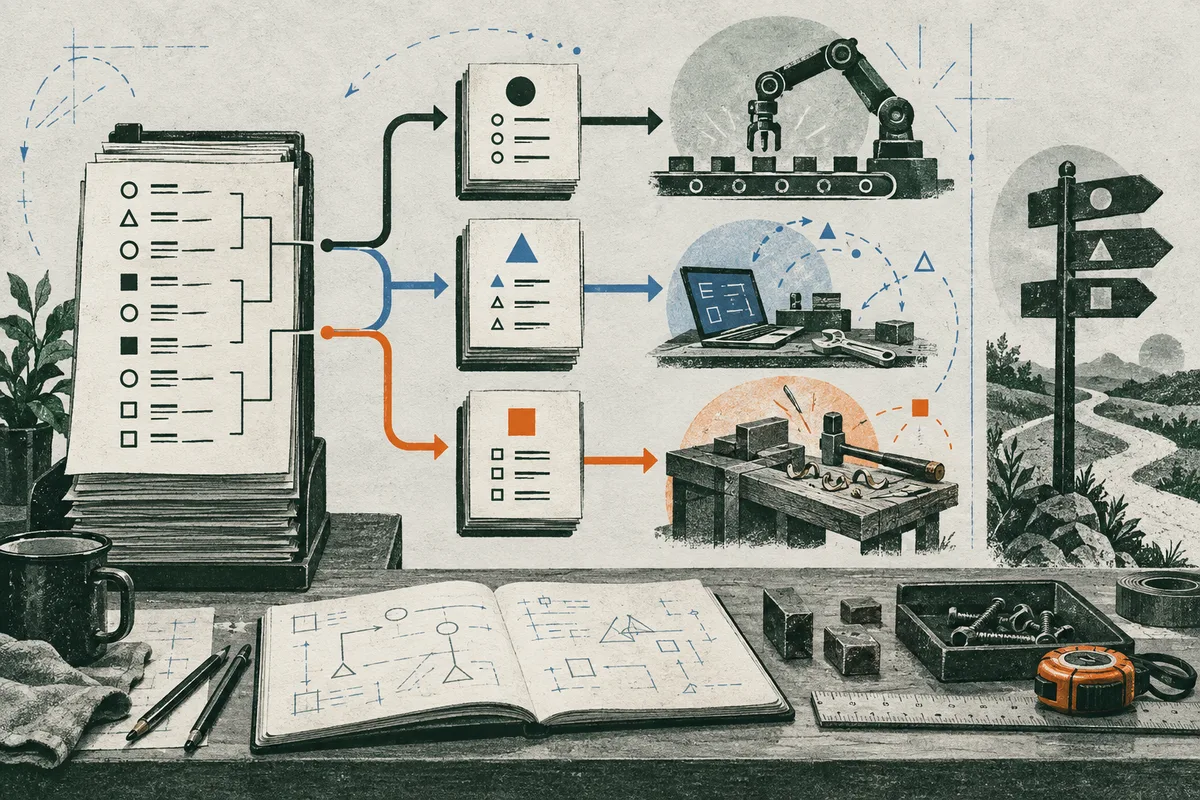
An exposure label usually leaves out at least four practical filters. First is capability quality. Producing a plausible draft is different from producing a correct, complete, traceable result in a consequential workflow. Second is adoption. A company may lack clean data, integration, security approval, budget, training time, or a process for checking outputs. Third is demand. Faster production can reduce labor needed for a unit of work, but it can also support more volume, new services, shorter response times, or higher standards. Fourth is accountability. Someone still has to decide what counts as acceptable, handle exceptions, and answer when a result is wrong.
The U.S. Bureau of Labor Statistics treats its own projections as conditional descriptions, not precise forecasts. It says its ten-year projections rely on assumptions about the labor force, the economy, industries, and occupations, and that actual outcomes differ when those assumptions fail. Its AI work examines tasks and occupations where technology may matter, but the agency emphasizes substantial uncertainty and annual revision. This is a useful model for personal reasoning: use exposure to identify where to investigate, then look for evidence from your employer, clients, workflow, and local labor market.
Observed use is another separate signal. Anthropic's 2026 Economic Index distinguishes conversations where people delegate a task with little input from more collaborative interactions. Its data shows that the same output can be produced with very different levels of human involvement depending on the product and workflow. The study also warns that its survey is not representative of the general population and that usage logs alone cannot show economic effects. A tool being used somewhere, or being able to complete a task in a demonstration, is not proof that your employer can safely remove the task from your role.
A simple way to keep the signals apart is to write them as a chain: capability, use, adoption, demand, and displacement. Capability asks whether the system can perform the task at an acceptable quality. Use asks whether workers are doing so now. Adoption asks whether an organization has made the change safe and worthwhile. Demand asks what happens to the amount and value of the work. Displacement asks whether people lose roles or opportunities after all those conditions interact. Each step adds uncertainty. Skipping the middle steps is how a technical demo becomes a frightening career claim.
The same chain explains why two people with one job title can need different responses. One may spend most of the week producing routine drafts inside a standardized process. Another may spend most of the week interpreting incomplete information, coordinating people, and defending a decision. Both can be exposed at the occupation level, but their immediate experiments, learning gaps, and alternatives differ. A broad score cannot replace that local description. Your evidence should stay close to the work you can observe, measure, and discuss with the people who depend on its result.
A worked audit: from job title to task bundle
Start with the work you actually do, not the label on your contract. Write down ten to fifteen recurring tasks and describe each as an observable action. Replace marketing with turn customer notes into a campaign brief, compare performance against last month, or resolve a disagreement about the claim. Replace software development with inspect a failing request, choose a data model, write a test, or explain the trade-off to a product manager. The more specific the task, the less likely you are to mistake a broad occupation score for a personal diagnosis.
For each task, ask five questions. Can the inputs be made available digitally? Is the desired output clear enough to check? Is the task repeated often enough to justify a workflow? What is the cost of a wrong result? Who owns the decision after the output is produced? These questions separate a low-friction drafting task from a task that looks easy but carries hidden context and liability. Mark the task as exposed, augmented, or human-accountable, but allow more than one label. A task can be exposed in production and still require a person for verification.
For a recurring report, that distinction changes the experiment. You might let a system sort incoming records and draft a variance summary, while keeping source selection, unusual-case investigation, and the final explanation with a named reviewer. Record the version of the process, the checks performed, the errors found, and the time spent correcting them. If the draft saves time but creates extra checking or weakens the explanation, it has not yet created usable capacity. If it does improve the workflow, the evidence can support a conversation about redesigning the role, documenting a new responsibility, or learning the missing data and evaluation skills.
Now add a second column for your evidence. Do you already use a tool for this task? Has your team changed the process, target, or staffing around it? Are customers asking for something different? Is the output reviewed, measured, or merely accepted because nobody has time to inspect it? The answers tell you more about near-term change than a general headline. If the evidence is only that a tool could do the task, record that uncertainty rather than converting it into a score.
Keep capability and consequence in separate notes. A system might produce a usable first draft, but the consequence of using it could be more review, a faster deadline, a smaller team, a new service, or no operational change at all. Ask who benefits from the time saved and who absorbs the checking. This is where a task audit becomes a career decision rather than a technology checklist. It surfaces whether your best next move is learning, negotiating scope, protecting quality, or testing a different role.
This audit also reveals where your experience matters. Domain knowledge can help you frame the problem and detect a bad answer. Relationships can determine whether someone shares the information needed to act. Physical access, regulated procedures, and local context can block automation. Judgment and accountability may remain even when production is accelerated. None of these features makes a task permanently safe. They show where your next investment may be more useful than a generic tool course.
The realistic responses: upgrade, adjacent move, or larger change
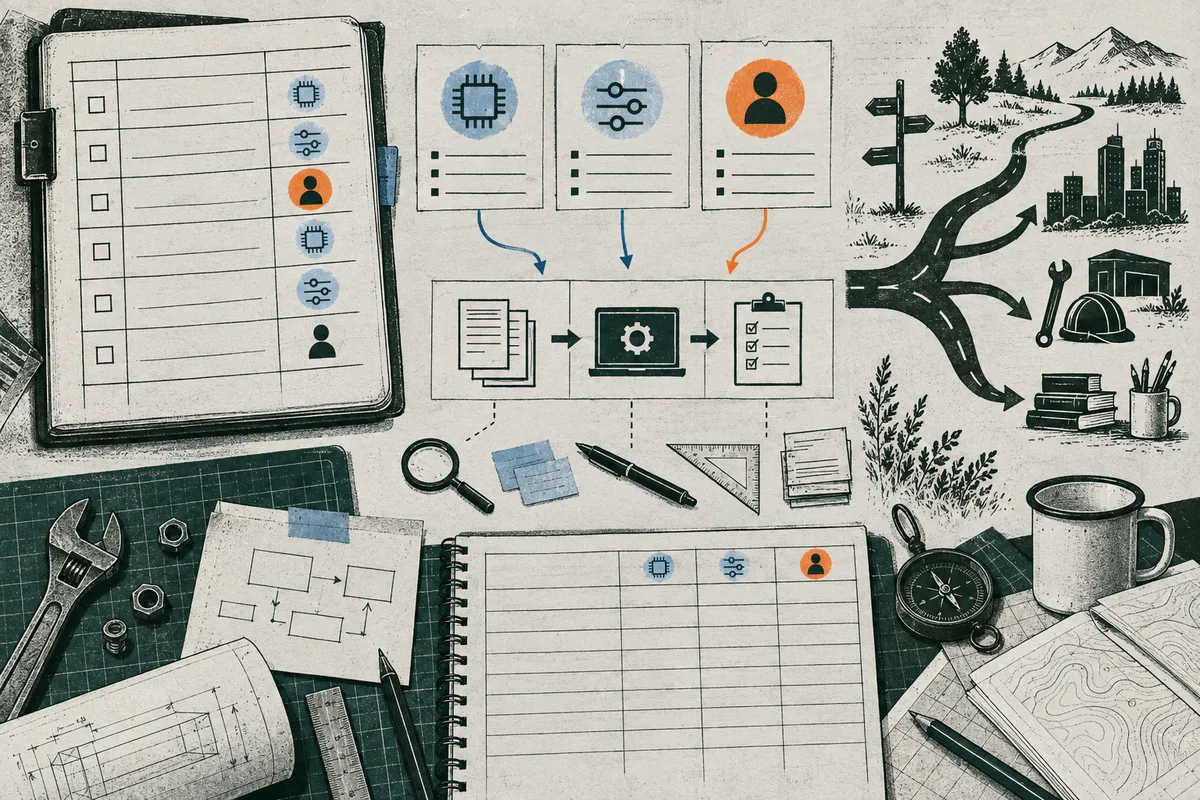
Once the audit is complete, compare three responses. An upgrade keeps your field and redesigns your current work. An adjacent move uses your experience in a neighboring role whose task bundle has better fit. A larger change requires a new occupation, longer training, a new location, or a material reset in income and seniority. None is automatically the brave option. The right choice depends on the pressure in your actual workflow and on constraints such as a salary floor, caring responsibilities, health, visa status, schedule, geography, and available study time.
An upgrade is strongest when you can see a small workflow that needs improvement and you can obtain permission to test it. Learn the durable pieces first: problem framing, data handling, evaluation, source checking, basic automation, and communicating limits. A short course can help you start, but a small work-relevant project gives better evidence of capability than a certificate alone. For example, build a documented process that turns recurring notes into a draft, records the checks, and shows where a human must approve the result. Do not automate sensitive work without the relevant access, review, and privacy rules.
An adjacent move is worth examining when the exposed production tasks are growing while your stronger assets sit elsewhere. A reporting specialist might move toward stakeholder planning, data quality, implementation, or controls if those functions use the same domain knowledge but place more weight on coordination and verification. That is a hypothesis to test against real vacancies and conversations, not a promise of demand or pay. A larger change deserves a higher evidence threshold because degrees, long courses, relocation, and unpaid practice have real costs. Begin with the smallest credible test before committing.
The comparison should include downside, not just upside. A role with more technical language may require evening study, a location you cannot reach, or a temporary income drop. A role with more human contact may increase emotional or physical load. A course may be affordable but provide little feedback; a degree may provide depth and signaling but consume years. Write these constraints down before ranking options, because a theoretically attractive path that cannot fit your life is not a realistic recommendation.
Learning choice should follow the intended outcome. If you want to use AI in your existing field, a targeted course plus a supervised project may be enough to test the workflow. If you want to build AI-enabled products, you may need programming, software practice, data handling, and deployment feedback. If you want ML engineering or research, the prerequisites and depth are greater, and a degree may be relevant depending on the role. A certificate signals completion; it does not by itself prove workplace capability.
What to do next: replace fear with a decision record
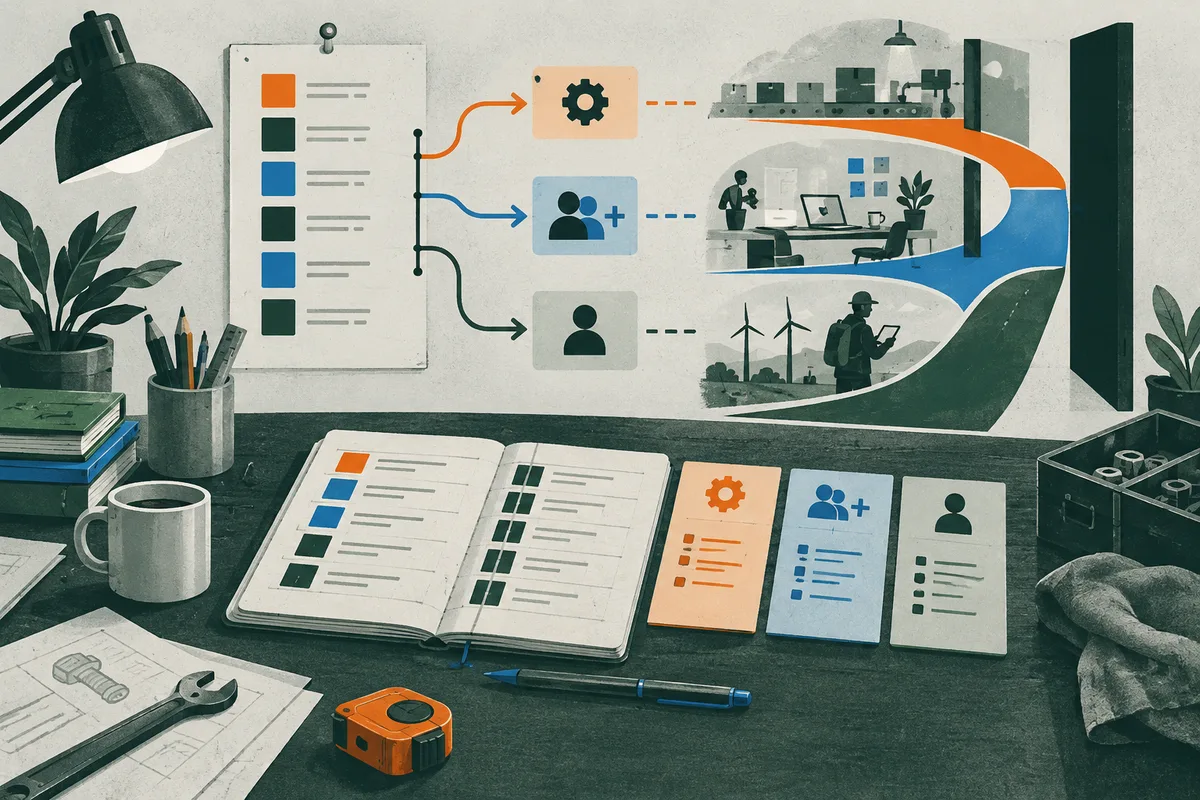
Make the next decision observable. In the next week, record ten recurring tasks, the evidence for each exposure judgment, and the human checks that cannot be skipped. Choose one low-risk task where quality can be compared before and after a tool-assisted workflow. Measure rework, review time, error discovery, and whether the result is actually useful to the person who receives it. If you cannot define the check, you are not ready to delegate the task. If the experiment improves the process, document what changed and what responsibility remains with you.
Then review the labor-market side. Look at current vacancies or internal role descriptions for the adjacent work you are considering. Compare the required experience, credentials, location, schedule, and pay range with your constraints. Separate a repeated requirement from a single fashionable phrase. Ask whether your project can demonstrate the requirement, whether you need feedback from a manager or practitioner, and whether a course fills a real gap. A decision record is more useful than a list of tools because it connects learning to an outcome you can inspect.
Set a review date rather than waiting for certainty. After two or four weeks, ask whether the experiment changed your output, your workload, your confidence in checking results, or the way others rely on you. If nothing changed, that is evidence too: the barrier may be access, process design, demand, or a poor tool fit. If the task changed but the role did not, investigate who owns the new work and whether expectations are becoming clearer or simply heavier. A measured pause is better than an impulsive career reset.
The strongest conclusion from the evidence is narrower than the headline claim. AI exposure is a reason to inspect your tasks early, especially the digital and repeatable ones. It is not enough to infer that your occupation will disappear or that a new credential will protect your income. The exception matters too: if your employer is already redesigning the workflow, reducing review layers, or changing the volume and standard of output, the personal response may need to be faster. That is evidence of local change, not a universal probability.
Use the next decision point to choose between staying and redesigning, testing an adjacent path, or investigating a larger change. If your task mix is unclear, start with the free task-level checker at /ai-job-risk-checker. If the trade-off involves salary, geography, learning time, and family or health constraints, a personalized roadmap can compare the three scenarios and turn the chosen direction into a 30/60/90-day plan. The tool can organize uncertainty; it cannot guarantee employment, income, or a safe career.
Questions readers ask
Does AI exposure mean my job will be replaced?
No. It means that some tasks in the job appear compatible with an AI capability. Replacement also depends on reliability, adoption cost, demand, workflow design, regulation, and who retains accountability. Exposure is an early warning signal, not a validated probability that you will lose your job.
What is the difference between task exposure and occupational exposure?
Task exposure describes a specific activity, such as summarizing a document or checking a routine record. Occupational exposure aggregates many tasks under a job title. Because jobs contain different bundles of work, an occupational label can hide meaningful differences between people with the same title.
What tasks are usually more exposed to generative AI?
Digital, repeatable tasks with clear inputs and outputs are often easier to assist or automate, including drafting, classification, transformation, and routine comparison. That does not make them risk-free. Accuracy checks, private data, exceptions, and the cost of a wrong result can change the practical decision.
Which parts of a job are harder to automate?
Tasks involving physical access, tacit context, trust, negotiation, judgment under uncertainty, and accountable decisions often create more automation friction. They are not permanently immune. Their value may change, and AI may still support preparation, documentation, or analysis around them.
Do I need to become a machine-learning engineer to respond?
Usually not if your goal is to use AI in your current field. Start with a named workflow, data and source checking, evaluation, basic automation, and communicating limits. Deeper programming and mathematics make sense when your goal is to build production systems or pursue ML engineering or research.
How can I assess my own AI exposure?
List recurring tasks rather than relying on your job title. For each, record whether the inputs are digital, the output is checkable, the task repeats, the cost of error is acceptable, and a person remains accountable. Then compare your notes with actual workflow changes and relevant vacancies.
Should I take a certificate, course, or degree?
Choose the smallest path that matches the outcome you need. A targeted course and project may support an upgrade in an existing role. A certificate can structure learning but does not prove capability by itself. A degree is a larger commitment that may be justified by prerequisites, depth, feedback, signaling, or the requirements of a new technical path.
What should I do if my employer is already changing my workflow?
Document which tasks, checks, targets, and responsibilities are changing. Test a low-risk workflow where quality can be measured, and ask what happens to review, ownership, and workload. Then compare an upgrade, adjacent move, and larger-change option against your income, location, schedule, health, and family constraints.
Sources and notes
- Generative AI and Jobs: A Refined Global Index of Occupational Exposure
Supports the task-level exposure method, exposure gradients, global exposure estimates, and the conclusion that job transformation is more likely than whole-job automation in most occupations.
- New ILO brief explains what AI exposure indicators reveal about jobs
Supports the limits of exposure indicators, including their static task descriptions, adoption assumptions, and inability to predict job losses on their own.
- Artificial intelligence and the changing demand for skills in the labour market
Supports the distinction between specialized AI skills and changing task requirements, plus the mixed evidence on skill demand in highly exposed occupations.
- Artificial Intelligence (AI) impacts on employment projections
Supports the conditional nature of occupational projections, the uncertainty of AI effects, and the need to interpret technology impacts alongside broader economic assumptions.
- Anthropic Economic Index report: Cadences
Supports the distinction between observed AI use, delegated and collaborative workflows, survey limitations, and the gap between tool usage evidence and economy-wide labor outcomes.
Apply this to your own work
See the whole job market at once.
Explore which occupations AI may reshape, then turn the signal into a practical response.
Explore the job map