
The July 2026 Epoch AI/Ipsos survey found that 20% of employed U.S. respondents reported AI now handled mostly or all of at least one of ten activities previously delegated to a coworker or contractor. It documents reported task handoffs, not jobs lost or reduced labor demand. A September Stanford study adds aggregate evidence of changing workforce composition at adopting firms, but neither result tells what happened to any one worker.
What does the one-in-five result count?
The July 2026 Epoch AI/Ipsos result counts respondents, not tasks or jobs: 20% of employed U.S. adult respondents reported that AI now handled mostly all or all of at least one of ten measured activities that they or their team had previously delegated to a coworker or contractor. In the report “One in five US workers now delegates tasks to AI instead of other humans,” the qualifying answer is therefore a person-level “at least one” event. It does not mean that one in five jobs was transferred, that 20% of all work is done by AI, or that every qualifying respondent lost a coworker, contractor, or position. The denominator is respondents in the weighted employed-adult sample; the event being counted is a reported change within one or more selected activities.
Those units matter because a task can move without a job moving. A respondent might report that AI now prepares most of a recurring output once sent to a contractor, while the respondent still performs other work, checks the output, communicates with colleagues, or remains accountable for the result. Such a response qualifies even if the person's position continues and no staffing decision has been made. Conversely, a task that AI could perform in principle does not qualify unless the respondent reports that it now does mostly all or all of work previously delegated to a coworker or contractor. The question is about a reported handoff in current work, rather than a forecast of technical capability.
Epoch AI reports examples among the selected activities, including preparing documents, analyzing data, and writing software. These labels help show the survey's unit: each is a category of work activity, not an occupation or a complete job description. The one-in-five figure also does not count how many activities each qualifying respondent named, how much time those activities occupy, or whether the handoff was permanent. A respondent with one small recurring activity and one with several substantial activities both meet the respondent-level threshold if at least one answer qualifies. Those differences cannot be recovered from the headline percentage alone.
There is a sound reason to take the response seriously: the item asks about work said to have been delegated before and now mostly or entirely handled by AI. That makes it more concrete than asking whether a worker thinks AI might be useful. But the result remains a weighted self-report, not an observed transaction log or a record of an employer's staffing choice. The respondent must recognize the earlier delegation and judge how much of the activity AI now handles. The estimate describes how often this qualifying experience was reported in the surveyed population; it cannot by itself tell whether a team redistributed work, a contractor engagement ended, or anyone's job was displaced. Keep the inference at that level: evidence of reported task reassignment, not a job-loss rate.
Sources: One in five US workers now delegates tasks to AI instead of other humans | Epoch AI
How strong is this survey snapshot?
The survey has a more defensible basis for population estimates than an open online poll, but its precision and meaning still depend on how respondents entered and answered it. Ipsos’s “Epoch AI/Ipsos August 2026 poll” study page says the July wave began with 1,747 U.S. adults recruited from its KnowledgePanel and screened them for employment. Of those, 1,106 employed adults entered the survey; three responses were excluded under quality rules, leaving 1,103 analyzed respondents. Epoch AI’s “Polling on AI usage” documentation identifies fieldwork from July 10 through July 19, 2026. The distinction between 1,106 surveyed employed adults and 1,103 analyzed cases is useful: the headline estimate is based on the latter, not every person who initially passed the employment screen.
KnowledgePanel uses probability-based recruitment, meaning people are selected for panel participation through a sampling process rather than joining an AI poll through an open link. That design gives the researchers a clearer route to estimating beyond a self-selected group of people especially interested in automation. It does not ensure that every sampled person responds or that respondents interpret a question identically. Ipsos reports weighting the results to population benchmarks, including age, gender, race and ethnicity, education, census region, household income, and metropolitan status. Weighting adjusts the contribution of respondents to better match those benchmarks; it does not turn a respondent's recollection into direct observation or repair every possible difference between respondents and nonrespondents.
Ipsos reports a full-sample 95% margin of sampling error of plus or minus three percentage points, including a design effect. This is an estimate of sampling uncertainty under the stated design, not a guarantee that every result lies within three points of a true value, and it should not be attached mechanically to estimates based on much smaller groups. The Epoch polling documentation also presents 90% intervals for reported results. These intervals express uncertainty under the polling method; a narrower or wider interval does not address whether people remembered a prior delegation accurately or understood “mostly all or all” in the same way. Different uncertainty conventions should be read as published, rather than combined into a single precision claim.
The sample flow and weighting support a useful snapshot of employed U.S. adults, and the probability-based panel is a meaningful strength over an unrestricted opt-in poll. Still, several sources of uncertainty remain. People may not recall when work shifted, may attribute a coworker's or contractor's former contribution differently, or may vary in how they judge AI's share. Some eligible adults may not respond, and weighting can only adjust measured characteristics for which benchmarks and respondent data are available. The study documents survey procedures, not independent verification of each answer against workplace records. These limits qualify how sharply the estimate can be interpreted, without making it equivalent to an unstructured internet poll.
Subgroup estimates deserve particular care because their effective bases are smaller than the full analyzed sample. For example, any estimate restricted to respondents who regularly perform a given activity uses only a subset, and the number who report a particular AI experience within that subset can be smaller again. The full-sample margin of error does not describe that narrower estimate. Epoch’s documentation provides task bases and interval information, but a reader should treat fine distinctions between small groups as less settled than the broad sample pattern. Differences of a few points may reflect sampling variation, weighting, or the composition of the subgroup rather than a stable difference in workplace behavior.
The practical reading is to treat the result as a measured survey snapshot with known design strengths and ordinary survey uncertainties. The panel method and weighting make it more informative about the target population than a poll of volunteers recruited from a technology forum. Yet no survey design can remove question interpretation, nonresponse, or recall from a self-reported experience measure. Precision also varies with the number of people contributing to each estimate. The design supports cautious population-level reporting; it does not justify treating small subgroup rankings as exact or individual answers as audited workplace records.
Sources: Epoch AI/Ipsos August 2026 poll | Ipsos; Polling on AI usage | Epoch AI; One in five US workers now delegates tasks to AI instead of other humans | Epoch AI
What do the ten activity labels leave outside the frame?
The ten labels are a practical cross-occupation lens, not ten miniature job descriptions. The U.S. Department of Labor’s “O*NET OnLine Help: O*NET Overview” distinguishes occupation-specific tasks from generalized work activities: the latter describe kinds of work that recur across different occupations. Epoch AI’s “Polling on AI usage” draws on that generalized level to ask about common knowledge-work activities. A label such as analyzing information can therefore apply in several roles, even though each role uses different subject matter, standards, tools, and consequences. The category lets a survey ask a comparable question across workers; it cannot, by itself, tell a reader what an entire occupation consists of or how a particular employer has arranged it.
The denominator is conditional on doing the activity. Epoch AI’s “Polling on AI usage” explains that respondents answer the activity questions when they say the activity is a regular part of their job. Thus a reported use figure for a label describes workers who report regularly doing that kind of work, rather than all employed respondents or everyone with a given job title. This matters when applying a percentage: it is not the share of accountants, analysts, designers, or managers whose jobs have been automated. People carrying the same title may have different recurring duties, and people with different titles may both perform the activity. The survey organizes responses by the shared activity, not by a detailed occupational cross-tabulation.
That choice also sets a boundary around what the ten-item frame can show. It does not inventory every occupation or every task within one. A role may depend on physical work, interpersonal obligations, tacit local knowledge, or context-specific decisions that the generalized labels do not describe in enough detail. Some recurring responsibilities may sit outside the selected ten altogether; others may be bundled inside a broad label but differ in stakes or workflow from one workplace to another. These are limits of the activity categories as a representation of complete work. They do not establish that any particular worker or kind of job was excluded from the survey sample, and they do not support a claim about how representative the sample is. They mean only that a common activity measure cannot recover all the differences in a person's job.
The trade-off is useful when kept explicit. Occupation titles can conceal shared work: preparing a document, maintaining records, or analyzing information may recur across roles, so an activity frame can reveal a change that a title-by-title discussion misses. But the same breadth makes the labels too coarse for an occupation ranking. A single role can contain several activities with different frequencies and consequences, while one activity can take very different forms in different roles. The frame is best read as a map of selected recurring work categories, not as a census of complete jobs. Its strength is comparability at a common level; its limit is the detail it necessarily leaves out.
For an individual decision, translate the categories back into a personal task bundle. Identify which listed activities recur in your week, what outcome each produces, who depends on it, and what human judgment or coordination sits around the tool-facing step. Then distinguish the broad label from the version you actually perform: summarizing routine material is not identical to interpreting an ambiguous case, even if both can be described as analyzing information. This mapping is an application of the survey's unit, not a new score supplied by the study. It prevents a broad activity percentage from becoming a risk rating for your role and gives you a more concrete basis for noticing which parts of your own workflow are changing.
Where does reported use occur, and how much task content moves?
Epoch AI’s “One in five US workers now delegates tasks to AI instead of other humans | Epoch AI” reports some AI use across all ten sampled activities. Among workers who said they performed each activity, reported use ranged from 25% for maintaining records to 57% for designing computer systems or software. This is breadth across activity categories, with a conditional base for each one; it does not mean each worker uses AI across all ten, or that ten separate occupations have the same pattern. The range says that use is reported within varied kinds of work. Because broad activities recur across roles, that pattern is compatible with AI appearing in many different work settings while touching only some of the activities in each person's particular job.
Use also varies in how much of an activity respondents say AI handles. The Epoch AI report says that, for most activities, workers describe AI as assisting with only part of the work. Full or near-full involvement is less common overall, though software design is the category with the highest reported full or near-full involvement. That contrast is more informative than a simple used/not-used split: an AI tool can be present in a workflow without taking over its whole activity. Assistance may contribute a component, while a person still frames the request, selects relevant context, checks the result, adapts it, or completes dependent steps. The report measures respondents’ descriptions of involvement, not an independent audit of what the tool did.
The distinction helps reconcile wide activity coverage with limited whole-task transfer. Suppose, as a hypothetical illustration rather than a survey case, that a worker drafts a routine document with AI, checks the draft against source material and local requirements, then makes an accountable decision about whether it can be sent. A tool may contribute substantially to drafting, and the activity may count as AI use, while checking and the decision remain with the worker. In another workflow, a routine record update might be almost entirely handled by an automated process. Both can be described as AI appearing in work, but their degree of involvement and the remaining human contribution differ. The illustration explains how to read the categories; it does not claim that the survey measured this sequence or any particular occupation.
For a worker with a mixed portfolio, the practical unit is therefore the recurring activity as actually performed, including its component steps. Ask whether AI supplies suggestions, produces a first version, performs most of a bounded operation, or returns an output that still needs substantial revision. These distinctions describe workflow involvement; they do not by themselves measure quality, time saved, or staffing effects, which require separate evidence. Nor should the highest reported category be converted into a claim that whole jobs in software design—or any other occupation—are automated. The survey's percentages compare activity-level reports among people doing those activities, not job-level automation rates. Their value is to show where reported use appears and how much task content respondents say moves, with the activity and denominator kept in view.
A minority share reporting mostly or all involvement can still matter in a particular workplace if the activity happens frequently, consumes scarce capacity, or is central to how work is divided. At the same time, the survey does not quantify the value or frequency of each person's activity, so its reported involvement categories cannot tell an individual which part of their role matters most to an employer. The balanced reading is neither to dismiss near-full involvement because it is less common nor to treat any use as wholesale substitution. Broad adoption across activity labels and limited involvement in many instances can coexist: tools may enter a range of workflows while changing only a component in each. Whether that component changes a role depends on the local task bundle and how the organization uses the resulting capacity, questions these activity-level figures do not resolve.
Sources: One in five US workers now delegates tasks to AI instead of other humans | Epoch AI
Does more AI involvement mean more time saved?
Epoch AI’s report, “One in five US workers now delegates tasks to AI instead of other humans | Epoch AI,” finds reported time savings on 37% of tasks where AI assisted with part of the work and 53% where respondents said AI did most or all of it. Roughly one in six AI-assisted tasks was reported to take longer. The gap is consistent with a practical efficiency benefit when AI performs more of a task: in this survey, respondents more often said those tasks took less time. It is a comparison of reported task outcomes across levels of AI involvement, however, not a controlled test in which the same work was assigned different amounts of AI. The result supports an association; by itself, it does not tell us what caused the difference.
Several explanations fit that association. More AI involvement may itself reduce the time a person spends on a bounded task. A worker may also choose to delegate a larger share precisely when the goal is to finish faster, so the intended saving helps determine the degree of AI use. Or AI may be used more extensively on tasks where it already works well, while workers reserve lighter assistance for tasks that are harder to delegate. These possibilities can overlap. The cross-sectional survey does not separate them, establish their relative importance, or show that increasing AI involvement would produce the same saving for another task or worker. The competing explanations do not cancel the reported pattern; they limit the causal conclusion that can be drawn from it.
The denominator is also important: 37% and 53% refer to tasks in the respective involvement categories, not to the proportion of workers who saved time, nor to a measured share of each workday. A reported shorter task duration is not automatically a net reduction in labor. The estimate does not provide a time-and-motion record that totals prompting, review, correction, handoffs, or later rework across the whole workflow. A task can become quicker at one step while requiring attention elsewhere; conversely, an output may be produced quickly and need little additional effort. The survey’s reported task response does not calculate the full human-input balance around either case. It therefore cannot be translated directly into hours released across a team.
Nor does task time identify what happened to the capacity. A worker or team might use it to produce more outputs, take on a broader workload, respond sooner, or devote more time to other responsibilities. Those are plausible destinations, not outcomes measured by the time-saving percentages. The same survey result does not establish that the organization reduced total labor input, ended a contractor arrangement, cut hours, or reduced staffing. Time saved on one task and fewer workers required are different claims: the latter depends on what other work remains, the volume and quality of demand, and how managers allocate capacity. The poll does not trace that sequence from a task response to an employment decision.
A fair reading holds both sides together. The higher reported saving share when AI did most or all of a task is a meaningful signal that greater involvement can accompany shorter task time in workers’ experience; dismissing it would discard the survey’s positive result. But the 53% figure is not a guarantee that extensive AI use saves time on any particular task, and the longer-duration reports show that AI-assisted work is not uniformly quicker. The association cannot identify whether AI caused a saving, whether saving-oriented tasks received more AI, or whether use concentrated where it fit. For a particular workflow, the relevant question is how much human time the complete task takes over repeated instances, including checking and rework, and where any released capacity goes. Those local observations would add evidence the survey itself does not supply; they should not be mistaken for a conclusion already contained in its percentages.
Sources: One in five US workers now delegates tasks to AI instead of other humans | Epoch AI
What does light editing establish about output quality?
No. The editing distribution in Epoch AI’s “One in five US workers now delegates tasks to AI instead of other humans | Epoch AI” describes how much revision respondents reported making, not whether an output was correct or reliable. Across AI-assisted task outputs, 66% were reportedly used unchanged or with minor revisions, 27% received more extensive revision, and 5% were majorly reworked or mostly redone. This is evidence about perceived usability and revision effort in the reported workflow. It does not supply an independent quality score, test factual accuracy, or establish that an output remained fit for its eventual use. The categories tell us something useful about how much overt editing people said they did, while leaving the standard of success unresolved.
That distinction matters because revision and correctness are separate dimensions. An output can need little editing because it is accurate and already follows a familiar format. It can also sound fluent and require little visible rewriting while containing an error that the user has not noticed. A heavily revised response might be wrong or unusable, but extensive editing could instead reflect a deliberate adaptation to audience, voice, local rules, or a precise task. The reported categories do not tell us which of these explanations applied in a particular instance. Nor do they consistently reveal how much expertise was needed to recognize a problem: a specialist may correct a consequential detail with one small edit, while another user may accept the same mistake unchanged.
Here, verification means checking an output against the task’s standards and its consequential facts. Verification can be quick for a low-stakes draft whose purpose is to prompt a conversation, especially when a human reader can easily assess whether it fits. It can require more care when a result informs a decision, changes a record, or is passed to someone who relies on it. As a generic illustration, a worker might accept a routine first draft after a brief check, but compare each relevant fact and requirement before relying on a generated recommendation in a consequential decision. These examples explain why the same editing category can have different implications by task; they are reasoning illustrations, not survey cases or additional findings.
The amount of editing also does not show where accountability sits. A person may make only a small change yet remain responsible for validating the result, explaining it, or correcting consequences if it is wrong. Some quality work happens through review, comparison, or follow-up rather than changes visible in the final text. Conversely, a familiar and low-consequence output that is used as-is may genuinely be a strong workflow fit, and low editing should not be treated as meaningless. The survey captures respondents’ reported revision amount, so neither the reassuring interpretation nor the skeptical one can be assigned to every output from the aggregate category alone. To establish reliability would require assessment against suitable task standards, including relevant errors and downstream performance, rather than simply counting edits.
Editing and time are therefore distinct measured dimensions. The survey reports each as a worker account of AI-assisted work; its editing breakdown does not prove a particular time saving, just as a shorter task does not establish output quality. A low-edit share can support the limited conclusion that many outputs were perceived as usable with little revision. Whether those outputs were accurate enough for their purpose, whether later checks or rework were needed, and who bore responsibility remain open. Readers can use the distinction to interpret the finding without inflating it: light editing may be a real sign of fit in a familiar workflow, but it is not a substitute for evidence that the result meets the standard the work requires.
Sources: One in five US workers now delegates tasks to AI instead of other humans | Epoch AI
How does occupational exposure differ from observed task handoffs?
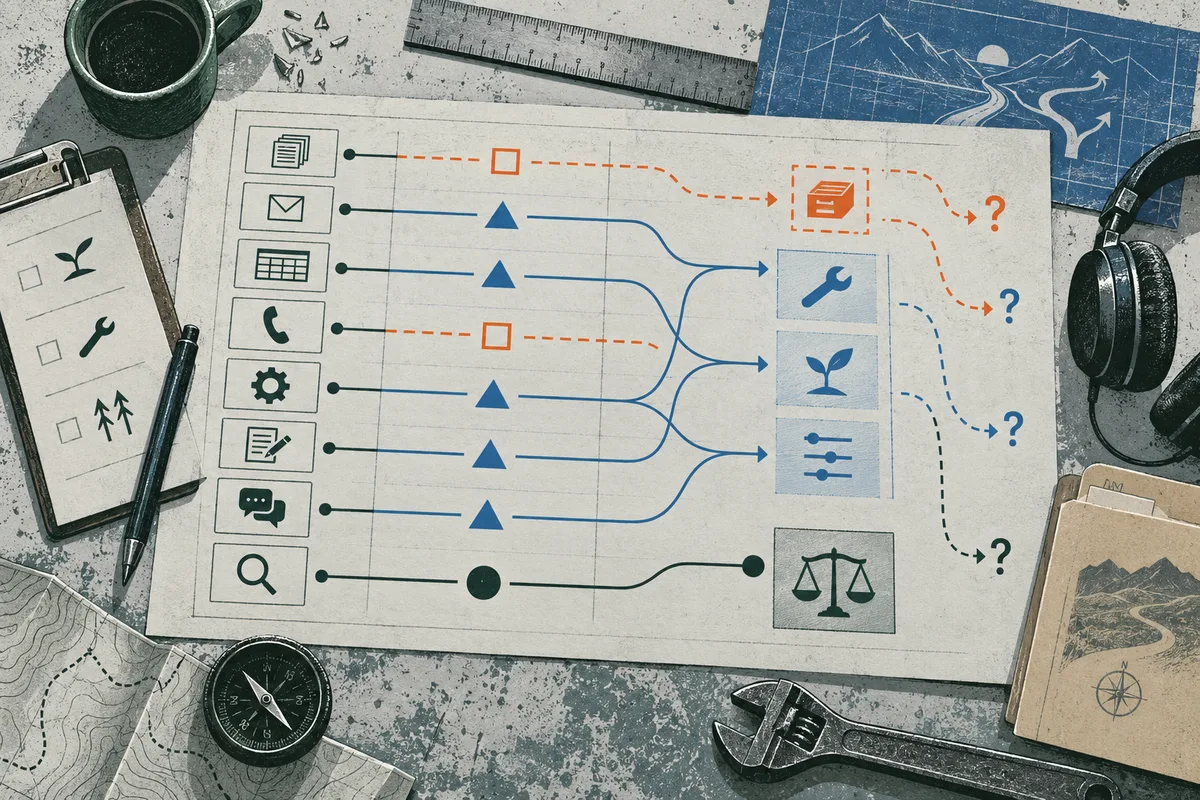
The International Labour Organization’s “Generative AI and Jobs: A Refined Global Index of Occupational Exposure” estimates where generative AI could apply to work tasks; it does not count deployments already made. Its unit is task ratings assembled into occupational exposure gradients. That makes it useful beside the July Epoch AI/Ipsos poll: the ILO model asks where work may be susceptible to transformation, while the poll asks employed U.S. adults what they currently report AI doing in selected activities. One is modeled applicability; the other is reported use and transfer. Neither directly measures an employer’s staffing choice or an employment outcome.
The ILO’s accessible 2025 abstract describes several inputs to the index: ratings for 2,861 tasks from a Polish occupational task system, survey input from 1,640 workers across ISCO-08 occupational groups, expert survey and Delphi discussion, and an AI assistant used to predict task scores. In broad terms, the task-level judgments are combined and extended through model prediction to estimate how exposed occupations are. These inputs provide more than a list of tasks that seem automatable: worker and expert judgments contribute to how task applicability is assessed, and the prediction step makes it possible to produce estimates across a large occupational classification. The result remains dependent on those task descriptions, ratings, judgments and modeling choices. It is not direct observation of a tool being used in a particular workplace. The different input types serve distinct roles in the estimate: the task inventory supplies the occupational descriptions, worker input reflects how tasks are experienced across groups, expert discussion contributes structured judgment, and the assistant predicts scores for tasks. Combining them widens coverage, but it does not turn those judgments into a direct time study or a record of adoption. The public abstract summarizes this architecture without exposing enough detail here to independently test every rating or prediction.
The abstract places one quarter of workers globally in occupations with some exposure and 3.3% in the highest exposure gradient. These are modeled shares across global employment, not estimates of the share of jobs that will vanish. The index retains gradients because exposure varies in degree: an occupation can include tasks with different levels of potential applicability, and a high-gradient classification is not the same as a forecast that the whole occupation can be performed by AI. The ILO authors judge transformation of jobs to be the most likely aggregate impact, since most jobs contain tasks that require human input. Read that as a directional interpretation of the modeled task mix. It describes the aggregate pattern the index suggests; it cannot assure what will happen to one role or worker.
This is where the model and the survey complement each other without being interchangeable. A modeled exposure estimate can flag an occupation for closer inspection even when a particular employer has not adopted a tool or a worker has not yet reported a handoff. Conversely, current use in a task does not establish that an entire occupation has high modeled exposure: adoption depends on tool access, workflow design, local rules, cost and whether outputs can meet the required standard. Exposure is a statement about the task mix and potential applicability; reported handoff is a statement about current worker experience in a defined survey. An employment outcome would require evidence about labor demand, hours, hiring or separations, measured separately. That distinction matters for timing as well as interpretation. An exposure index may identify tasks for which technical capability is relevant before an employer has procured a system, trained staff or accepted the cost of integrating it. But potential can fail to become use, and use can remain assistive rather than replace a worker’s contribution. Local constraints such as sensitive data, error costs, customer expectations and approval requirements can affect whether a theoretically applicable task changes in practice. Those factors explain why a modeled signal and a report of current use answer different questions; they do not quantify the chance of a later labor decision.
For a knowledge worker, an occupation-level index is best used as a prompt to inspect the component tasks, not as a personal risk label. Two people with the same occupational code may spend different portions of their week on document preparation, analysis, coordination or decisions, and those tasks can differ in how repeatable they are, what information they require and who is accountable for the result. A broad occupational gradient can hide this within-occupation variation. Looking at a task bundle brings the estimate closer to the actual workflow, while still leaving open whether an employer will adopt AI, redesign the role or change staffing. The ILO index helps identify where potential change deserves attention; its aggregate transformation conclusion is directional, not an assurance for any individual.
What can a workplace productivity result add?
A measured workplace deployment adds evidence about production inside one organization, between a model of task applicability and a broad labor-market outcome. In “Generative AI at Work,” a conversational assistant was introduced to customer-support agents in a staggered rollout. The study’s authors report an average 15% increase in issues resolved per hour across 5,172 agents. Throughput here means the number of support issues resolved in an hour; it is an output-rate measure. It says that the operation handled more issues per unit of agent time on average under the studied deployment. It does not itself report fewer paid hours, a smaller staff, fewer jobs, or a reduction in total labor demand.
The staggered introduction matters because the reported result concerns a tool entering an actual customer-support workflow over time, rather than workers estimating whether AI could help. It gives a concrete example that an assistant can change measured production in a particular setting. At the same time, the evidence belongs to the agents, support tasks, system and organization studied. The authors’ abstract is the accessible basis used here; this section does not independently audit the full methods or establish that the same effect would occur in other industries, with other tools, or under different service standards. A single deployment can demonstrate a possible mechanism without supplying a general forecast for knowledge work. The staggered rollout also gives the study a temporal structure: the assistant reached agents at different points, allowing the authors to compare productivity as access changed. That is more informative about a workplace intervention than a question asking whether AI is used, though the abstract alone does not warrant treating the estimate as a universal effect. The measured unit remains issues per hour, and the implication depends on how the customer-support process defines and routes issues.
The mean also conceals variation among workers. The authors’ abstract reports that less experienced and lower-skilled agents improved both speed and quality, while the most experienced and highest-skilled group saw slight speed gains alongside small quality declines. That pattern cautions against treating an average throughput increase as a uniform benefit or burden. The assistant may help some workers produce more quickly while changing the work differently for others; quality can move in a different direction from speed. The abstract’s group distinctions are reported findings, not a rule for predicting an individual agent’s result. They show why deployment evidence should be read at more than one level: the average describes overall throughput, while the reported experience and skill differences describe meaningful heterogeneity within that one setting.
Higher throughput creates capacity, but how that capacity affects labor depends on what the organization does next. If customers are waiting and demand is available, the organization could resolve more issues with its existing team, shorten delays, or expand the service. If demand is limited, quality requirements change, or costs and management priorities favor fewer labor inputs, some of the capacity could instead be converted into reduced hours, fewer assignments, or lower staffing needs. These are conditional pathways, not outcomes established by the throughput figure. The study’s reported production measure cannot tell which path was chosen, how many hours were required across the whole operation, or whether staffing changed. Demand, quality, cost and managerial allocation mediate the connection between producing more per hour and employing more or fewer people. In practical terms, a productivity gain could first appear as a queue shrinking or service levels improving, with the same headcount handling more volume. If volume later falls, or if the company chooses to target labor costs, a different staffing response is possible. Neither route follows mechanically from the measured rate: organizations may also reinvest capacity in more complex cases, coaching or quality checks. These are plausible allocation choices offered to explain the mechanism, not descriptions of what the study company did. The evidence needed to distinguish them would include changes in workload, hours, hiring and staffing alongside output and quality.
This distinction helps interpret the earlier survey’s task-level reports of shorter duration without repeating them as employment evidence. Self-reported task time can signal that work feels faster; a workplace throughput measure records a production change in a defined deployment. Both can matter, but neither alone reveals the allocation of added capacity. The Stanford customer-support result therefore strengthens the case that AI can alter measured production in real work, while leaving the labor-demand consequence open. The next question is whether adoption is followed by changes in employment records, workforce composition or hiring over time. The newer cross-country labor-demand study takes up that different outcome level; its evidence must be assessed on its own population, design and measures rather than inferred from this one firm’s productivity result.
Sources: Generative AI at Work | Stanford Digital Economy Lab; Generative AI at Work | arXiv
What changes when labor-demand evidence is added?
The September 2026 working paper “How Does AI Change Labor Demand? Evidence from 41 Countries | Stanford Digital Economy Lab” adds an employment-composition measure to evidence about AI use and productivity. Its accessible abstract says the researchers analyzed 1.25 billion job postings and 154 million employment records across 41 countries. They identify adoption using job advertisements involving generative AI, then use an instrumented event-study comparison of foreign affiliates of adopting companies with controls. The abstract reports that adopting affiliates’ junior workforce share fell relative to controls, primarily because senior employment grew, rather than because junior employment declined. It also describes modest overall employment growth as suggestive, and reports occupational shifts by seniority: senior employment moved toward AI-exposed occupations, while point estimates suggest junior employment shifted away from them. These are findings about workforce composition and labor demand at firm-affiliate level, not a count of individual workers replaced.
The distinction between share and headcount is central. A junior share is the number of junior workers relative to the affiliate’s total workforce. It can fall even while the absolute number of junior workers is steady or rising, if senior employment grows faster; it can also fall alongside a reduction in junior headcount. The abstract’s explanation—that senior growth was the primary driver—therefore matters: the relative shift does not establish a wave of junior job losses. Nor does suggestive overall employment growth mean that every group, occupation, country or firm gained jobs. Aggregate growth can coexist with distributional harm, fewer junior openings in particular settings, or a changed route into work. Inference from the reported pattern to entry-level pathway pressure is plausible, especially when senior staffing expands relative to junior staffing, but the abstract does not directly measure how many applicants entered, how training changed or whether a specific junior worker lost a position.
This makes the Stanford result meaningful counterevidence to a simple account in which AI adoption immediately eliminates employment across the board. It is not evidence that adoption has no costs. A firm can expand overall while changing the mix of experience it hires or retains; a growing senior workforce may complement AI tools while routine or developmental assignments become less available to junior workers. That mechanism is a possible interpretation of the composition pattern, not a directly established account of managers’ choices. Other pathways could also produce the observed relative change. The paper’s abstract reports the outcome and the study’s comparison design, but does not let this article audit those mechanisms or determine what happened inside an individual affiliate. Likewise, the shift in occupational mix by seniority points to uneven adjustment rather than one uniform response to AI exposure. It should prompt attention to who gains access to work and how entry routes change, without turning a relative aggregate measure into a personal forecast.
The design is more informative about labor demand than a cross-sectional report of task use because it compares workforce records around adoption across adopting affiliates and controls, rather than asking workers only what they do. The instrumented event-study strategy is intended to address the fact that firms choosing to adopt AI may differ from firms that do not. But a design label alone does not settle causal validity. The accessible Stanford abstract is the evidence reviewed here; the underlying working paper is available, but its instrument assumptions, adoption and seniority definitions, timing, robustness, and variation across countries and industries have not been independently audited for this account. The adoption proxy—AI-related job advertisements—also differs from direct measurement of a tool being used in the tasks identified by the July worker survey. The records capture affiliates’ aggregate employment patterns, not each worker’s task history, hours, wage, reason for leaving, or whether another employer hired them. Accordingly, the findings should be described as the paper’s reported event-study results, with its causal strength and generalizability still bounded by these unresolved details.
The study’s composition result can coexist with modest overall employment growth and with local displacement. If senior employment grows enough, the total workforce might expand while junior share declines; if a particular unit cuts positions, other units or firms could still grow. Conversely, a declining share does not prove absolute junior losses, so the result cannot by itself establish a net displacement count. The paper therefore complicates both a blanket “jobs are disappearing” conclusion and an equally broad “employment growth means workers are safe” conclusion. Its aggregate signal is that adoption may accompany a shift in workforce composition, with senior employment growth playing the primary reported role in the lower junior share. The evidence does not yet identify whether that shift reflects substitution of particular tasks, complementary demand for experienced workers, changing hiring practices, other firm changes, or some combination. Nor does it establish that a task formerly assigned to one coworker in the survey caused an employment outcome in the Stanford data. Those questions require linked measures and a credible way to distinguish AI-related changes from contemporaneous causes.
The U.S. Bureau of Labor Statistics’ “Worker Displacement News Release: 2026 A01 Results | U.S. Bureau of Labor Statistics” illustrates a different kind of measure: a defined employment outcome. In its January 2026 Current Population Survey displacement supplement, BLS estimated that 3.3 million long-tenured U.S. workers were displaced during 2023–25. For that statistic, displacement means job loss or exit because a company closed or moved, there was insufficient work, or a position or shift was abolished. This makes the estimate interpretable as displacement under the survey’s specified reasons and population definition. It is not an estimate of AI-related displacement: BLS does not attribute those events to AI, and the series does not connect a reported task handoff to a later job separation. Its value here is to show that labor statistics can define and count an employment outcome; it cannot supply the missing causal link for this article’s survey result.
A careful evidence chain from a task handoff to displacement would need more than any one of these measures. First, researchers would need a sufficiently specific record of adoption: which employer or work unit introduced which system, when, and how it changed the tasks and human inputs in practice. They would then need longitudinal labor records for the relevant workforce, tracking such outcomes as hiring, separations, hours, pay, role changes and contractor assignments before and after adoption. A credible comparison would estimate what would likely have happened without adoption, accounting for pre-existing differences and trends rather than treating adopters and non-adopters as interchangeable. To interpret the mechanism, the analysis would also need output, service demand, quality and cost measures: rising output or expanding demand can change staffing needs differently from a fixed volume of work produced with fewer labor hours. Finally, alternative explanations—restructuring, market contraction, mergers, outsourcing, or other technology and policy changes—would have to be considered. This is a standard of evidence needed to connect levels of observation, not a claim that one particular dataset has already met it.
The present sources occupy different rungs of that chain. The Epoch AI/Ipsos survey supplies a weighted, self-reported snapshot of workers describing AI involvement in selected activities, including work previously delegated to another person. The Stanford customer-support deployment previously discussed measures production in one workplace, while the 41-country working paper examines employment composition around a proxy for firm AI adoption. BLS supplies a specified displacement outcome without technology attribution. Taken together, these sources make it untenable to treat task transfer as proof of job loss, but also unwise to treat productivity or aggregate employment growth as proof that no group faces adjustment. In particular, the worker survey’s one-in-five finding cannot erase the Stanford labor-demand signal: the studies observe different populations, units and outcomes. Nor does the Stanford pattern convert the survey response into an individual outcome. The defensible conclusion is narrower: labor-demand consequences are possible and appear uneven in the aggregate study, while the causal path from a particular AI handoff to a particular displacement remains unobserved in this evidence set.
Sources: Worker Displacement News Release: 2026 A01 Results | U.S. Bureau of Labor Statistics; How Does AI Change Labor Demand? Evidence from 41 Countries | Stanford Digital Economy Lab
What is a proportionate next step?
Choose one recurring task that has changed and keep a short log over several cycles: what used to be handed off, what AI now does, what you review or redo, your own elapsed time, the output or service level, and where any freed capacity goes. This is a local observation, not a causal assessment. Look for sustained changes in workload, hours, hiring, contractor assignments or earnings before treating a handoff as evidence of labor-demand change; you may not have access to all those records, and missing data leaves uncertainty. If considering a larger move, compare an upgrade, adjacent role or broader change against prerequisites, training time, cost, location, pay floor, health and family needs. The free checker offers task-level change-pressure signals, not a validated probability of displacement. The paid roadmap can compare scenarios and build a plan, but does not guarantee employment or income. Start by recording the next instance of the task. If the change persists, ask what happens to the time or assignments it releases: more volume, deeper review, new work, reduced hours or fewer external assignments are materially different signals. Where a bigger transition seems necessary, test a small learning project or a conversation about internal work before committing money or leaving a role.
Questions readers ask
Does the July 2026 Epoch AI/Ipsos survey show that one in five workers lost a job to AI?
No. It found that 20% of employed U.S. respondents reported a qualifying handoff for at least one of ten selected activities. It did not measure job losses or staffing changes. A separate Stanford working paper reports a relative decline in junior workforce share at adopting affiliates, driven mainly by senior employment growth; that aggregate result does not establish individual displacement.
Sources and notes
- One in five US workers now delegates tasks to AI instead of other humans | Epoch AI
Primary report of the July 2026 survey's qualifying handoff measure and headline, use across ten activities, task-level AI involvement, time-saving association, editing responses, and study caveats.
- Polling on AI usage | Epoch AI
Documentation for the analyzed n=1,103, field dates, probability-panel method, weighting, task-question bases, question wording, uncertainty calculations and linked questionnaire/data.
- Epoch AI/Ipsos August 2026 poll | Ipsos
Ipsos confirms the KnowledgePanel sample flow (1,747 general-population adults screened, 1,106 employed, 1,103 after quality exclusions), English-language administration, weighting benchmarks and full-sample margin of sampling error.
- O*NET OnLine Help: O*NET Overview
Official O*NET taxonomy describes occupation-specific tasks and generalized/intermediate work activities, clarifying that the survey's activity labels span work found across occupations rather than representing complete jobs.
- Generative AI and Jobs: A Refined Global Index of Occupational Exposure | International Labour Organization
ILO 2025 index estimates occupational exposure from task ratings, worker survey input, expert discussion and model prediction; clerical work remains most exposed, and the authors judge transformation more likely than full redundancy in aggregate.
- Generative AI at Work | Stanford Digital Economy Lab
Institutional record describes staggered introduction of an AI conversational assistant to customer-support agents and an average increase in issues resolved per hour, establishing a workplace productivity measure distinct from staffing outcomes.
- Generative AI at Work | arXiv
Authors' abstract reports results by agent experience and skill, including speed/quality heterogeneity and evidence consistent with learning, illustrating that a mean productivity estimate can hide differences within a single support deployment.
- Worker Displacement News Release: 2026 A01 Results | U.S. Bureau of Labor Statistics
BLS defines displacement through closure/move, insufficient work, or position/shift abolition and reports 3.3 million long-tenured U.S. workers displaced from 2023–25; this outcome measure does not identify AI as a cause.
- How Does AI Change Labor Demand? Evidence from 41 Countries | Stanford Digital Economy Lab
September 21, 2026 working-paper abstract reports analysis of 1.25 billion job postings and 154 million employment records across 41 countries; instrumented event study finds lower junior workforce share at foreign affiliates of AI-adopting companies versus controls, driven mainly by senior employment growth rather than falling junior employment, with suggestive modest overall employment growth and occupational shifts by seniority.
Apply this to your own work
See the whole job market at once.
Explore which occupations AI may reshape, then turn the signal into a practical response.
Explore the job map