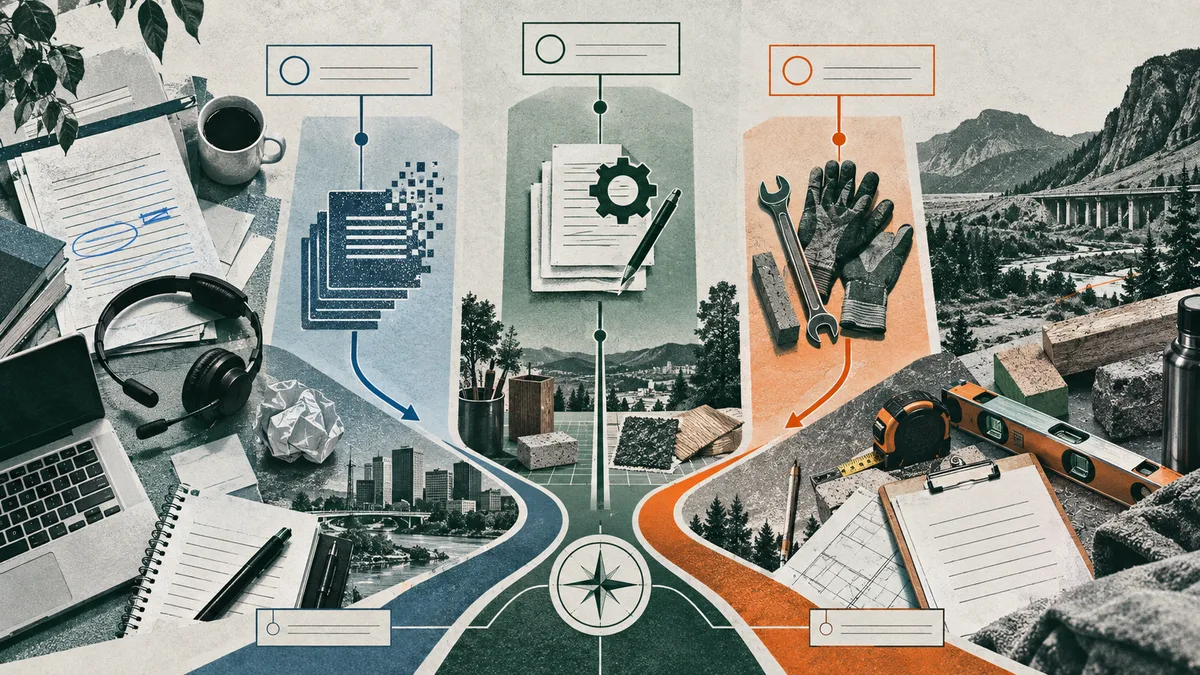
The OECD AI Exposure Measure does not say that language workers will lose their jobs while embodied workers are safe. It says that AI exposure has several dimensions. Current systems are closer to the capability profile of many routine information-processing, administrative, and codifiable tasks, so language-heavy work often has a smaller capability gap. Work that depends on seeing, manipulating, moving through changing environments, or handling physical objects has a larger gap in many cases, but that gap varies by task and by the technology involved. A warehouse picking task in a controlled layout is different from repairing an unfamiliar machine in a crowded site. A translator producing a first draft is different from a specialist accountable for a legally consequential interpretation. The useful conclusion is not to choose a job label with the lowest exposure. Break your work into tasks, identify which capabilities are being matched, and decide whether to upgrade the exposed part, move toward verification and responsibility, or build an adjacent option that fits your pay, location, health, and learning constraints.
The claim under review: language work is more exposed than embodied work
The claim sounds plausible because recent AI progress is visible in language. Systems can draft, summarize, translate, classify, retrieve information, and answer many questions. A text-only workflow can also be delivered through software, which makes it easier to test, copy, and place inside an existing process. By contrast, work that requires a person to reach, lift, position, inspect, or adapt to an untidy physical setting still encounters the limits of perception, dexterity, mobility, and safe control.
The OECD's new measure supports part of that intuition, but with an important correction. It measures the distance between AI capabilities and the capabilities occupational tasks require. It is not an observed adoption rate, a forecast of redundancies, or a probability that an individual will lose a job. A smaller AI Capability Gap implies higher potential exposure in the measure. The paper's headline finding is that exposure is multidimensional: some occupations are more exposed to language and reasoning systems, while others are more exposed to robotics, machine vision, and embodied AI.
That distinction changes the practical question. Ask which parts of your work are close to capabilities that systems can currently provide, which parts require a body in a variable environment, and which parts require someone to own a decision when evidence is incomplete. A language-heavy task can be exposed and still remain valuable when it carries context, trust, quality control, or liability. A physical task can be less exposed today and still change when sensing, robotics, or better workflow design reaches its setting.
What the OECD actually measures
The measure maps the OECD AI Capability Indicators to occupational requirements. The indicators describe current AI and robotic capabilities across nine domains: language; social interaction; problem solving; creativity; metacognition and critical thinking; knowledge, learning and memory; vision; manipulation; and robotic intelligence. The resulting gap is intended to be transparent, forward-looking, and updateable over a five-to-ten-year horizon.
The word exposure is doing specific work here. It means that a capability required in an occupation is closer to what current AI systems can do. It does not mean an employer has bought the relevant system, that the system performs reliably in production, that a task can be removed without harming quality, or that labor demand will fall. Adoption requires a business case, usable data, integration, training, regulation, and a redesign of responsibility. The OECD names those conditions rather than hiding them inside the index.
The indicators themselves are also a beta framework. The OECD says that continued engagement with AI researchers and psychologists is needed as capabilities change. That is a strength for a living measurement project, but it is a reason to read the measure as evidence about a moving capability frontier, not as a permanent league table of occupations.
The nine-domain design also prevents a common analytical shortcut. Language is not the opposite of physical work, and robotics is not a synonym for automation. A nurse, construction supervisor, warehouse lead, or laboratory technician may use language, vision, planning, social coordination, and manipulation in the same shift. Looking at the dominant task can hide the bottleneck that controls whether a system is actually useful. If a machine drafts the report but cannot obtain a reliable measurement, the report is not the main constraint. If a robot moves a part but a person must resolve every misalignment, the movement is not the whole job.
Why language-heavy tasks often show a smaller capability gap
Language work is exposed when the task is mainly the production or transformation of structured information. Examples include turning meeting notes into a draft, extracting fields from documents, producing a first translation, generating routine explanations, comparing clauses, or searching a large text collection for stated criteria. The output is digital, the input is often available to the system, and a reviewer can sometimes check the result against a source or a defined format.
The OECD's capability framework describes language broadly. It includes understanding, interpreting, and generating human language, not just conversational writing. That matters because a job called communications, research, legal support, finance, or administration may contain many exposed language and information tasks even when the job itself is not a language occupation.
But capability is not autonomous performance. A system can produce a fluent answer while missing a local rule, an exception, a hidden assumption, or the consequence of a wrong classification. The task may therefore move from drafting to setting the brief, checking evidence, resolving ambiguity, protecting confidential information, and signing off on the result. If the output is cheap but verification remains expensive, the role is being redesigned rather than simply erased.
This is why the right response for a language worker is usually task-specific. Learn how to define a repeatable workflow, test outputs against a trusted source, document failure modes, and decide when a case must be escalated. Those are durable capabilities. Memorizing one interface or prompt pattern is less durable because tools and permissions can change.

Why embodied work is not one low-exposure category
Embodied work sits across several OECD capability domains. It may require vision to locate an object, manipulation to grip and place it, robotic intelligence to sequence movement, problem solving to respond to a fault, and social interaction to coordinate with a customer or colleague. A single occupation can combine a repeatable physical routine with difficult judgment in an unpredictable setting.
Consider an example: a worker loads material into a machine, watches a sensor, and removes finished pieces from a fixed position. Parts of that workflow may be suitable for automation because the environment, objects, and sequence are controlled. A technician who diagnoses a damaged installation in a cramped, changing site faces a different problem. The technician must interpret incomplete signals, move safely, improvise with imperfect access, and explain a decision to another person. Both jobs are physical. Their capability profiles are not the same.
The OECD's earlier work on AI and skills gives a concrete illustration. In one Canadian manufacturing case, an AI-powered robot measured and cut glass tiles, while workers shifted toward loading inputs and monitoring output. That is task change, not evidence that every manufacturing role disappears. It also shows why embodied work can be augmented before it is fully automated: the machine may handle a precise repeatable step while people manage setup, exceptions, maintenance, and accountability.
A lower language exposure does not make an embodied role permanently insulated. Better machine vision, manipulation, and robotics can reduce the gap for tasks in stable environments. Nor does a higher embodied exposure score automatically mean implementation is practical. Safety, cost, liability, downtime, union or worker consultation, and the value of human presence all affect whether a capability becomes a deployed workflow.
The strongest exception: context and accountability can matter more than medium
The clean comparison breaks down when the medium hides the real work. A written task may be easy to generate but hard to validate. A physical task may look manual but be highly standardized. Conversely, an ostensibly language-heavy job may depend on trust, negotiation, care, or a high-stakes decision that cannot be reduced to fluent text.
The OECD measure identifies occupations requiring contextual judgment, interpersonal understanding, complex decision making, and responsibility as further from current capability profiles. These are not magic human-only labels. They are signals that the task requires more than matching a pattern or producing an output. The work may involve discovering what the user really needs, noticing an unrecorded condition, balancing competing obligations, or accepting responsibility for an action.
This is also where observed use and exposure can diverge. A language system may be technically capable of summarizing a file, but an organization may prohibit its use because the data is sensitive. A robot may be able to repeat a movement, but a site may remain too variable or costly for deployment. An employer may adopt a tool and keep headcount stable while changing output targets, review work, or skill requirements. The measure can inform those questions; it cannot answer them by itself.
For a worker, the practical asset is not an abstract promise of being human. It is evidence that you can frame ambiguous work, verify a system, handle exceptions, communicate with affected people, and remain accountable for the result. Those capabilities can complement both language systems and embodied systems.
There is a second exception in the opposite direction. Some work looks interpersonal but is highly scripted, with clear inputs, narrow choices, and little discretion. Some work looks physical but is governed by a detailed procedure and a fixed workspace. The measure can reveal the capability overlap, but the worker still has to inspect the actual workflow. Ask what happens when the input is missing, the person disagrees, the equipment behaves unexpectedly, or the result must be defended later. Those moments often determine where value and training needs move.
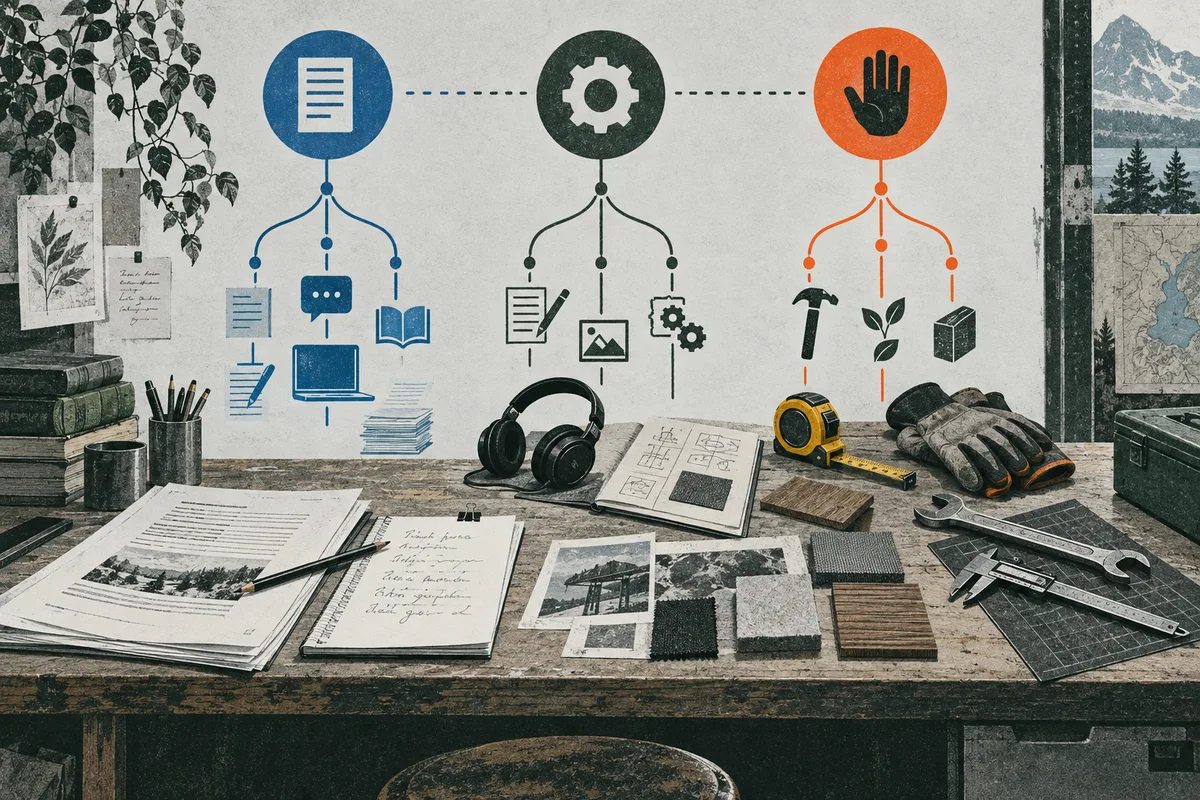
What other OECD evidence adds, and where it stops
The measure is best read alongside other OECD evidence, not as a standalone employment forecast. The OECD's 2023 Employment Outlook describes AI exposure as overlap between occupational tasks and capabilities in which AI has progressed, while warning that exposure is not equivalent to automation. It also describes both displacement and productivity or reinstatement channels, so the direction of total labor demand is not settled by exposure alone.
A later OECD analysis of online vacancies across ten countries found that about one-third of vacancies were in occupations classified as highly exposed under that study's earlier exposure measure. It also found growing demand for management, business, digital, emotional, social, cognitive, and language skills in highly exposed occupations. That result does not prove that employers are rewarding every one of those skills because of AI. The report notes broader digitalization and the shift from manufacturing toward services as other possible drivers.
The same caution applies to training. The OECD distinguishes specialized skills for developing and maintaining AI systems from elementary AI knowledge and broader digital, analytical, problem-solving, communication, teamwork, and judgment skills for using applications. A worker who needs to redesign a workflow does not automatically need a computer science degree. A person who wants to build and maintain models may need deeper mathematics, programming, data, and hands-on practice. The goal determines the learning path.
Taken together, the evidence supports a narrower conclusion: language and information tasks are a nearer capability match for many current systems, while embodied work contains more physical and environmental friction on average. Neither statement predicts a particular employer's next move or a person's employment outcome.
Turn the comparison into a task audit
Start with a recent week of work, not your job title. Write down recurring tasks and sort each one by the capability it needs. Mark language and information processing, visual inspection, physical manipulation, coordination, judgment, relationship work, and accountability. Then add four practical questions: Is the input available digitally? Is the environment stable? Can a competent person verify the output? Who carries the cost if the output is wrong?
A document reviewer might find that searching and first-pass extraction are exposed, while interpreting an unusual clause and explaining a risk to a client remain judgment-heavy. A field service worker might find that route planning and parts lookup are exposed, while diagnosing a novel fault, working safely around people, and deciding whether a repair is acceptable remain harder to automate. The same task can shift categories as equipment, data quality, or rules change.
Use the audit to choose one of three proportionate moves. First, upgrade the current role by testing one bounded workflow and measuring rework, errors, time, and escalation. Second, move adjacent toward evaluation, implementation, quality, safety, customer context, or operational ownership where your existing domain knowledge still matters. Third, consider a larger change only when the task trend, employer context, pay floor, location, health, family responsibilities, and realistic training route make it coherent.
Do not turn the audit into a personal replacement score. A transparent signal can help you notice exposure, but it cannot estimate the probability of redundancy. The useful output is a small list of tasks to monitor, a capability to strengthen, and a decision you can revisit when your workplace supplies better evidence.
A useful audit records evidence over time. Note how often the task occurs, how much of it is repetitive, what information is missing, how much review is needed, and what kind of error would matter. Record whether a manager values speed, consistency, flexibility, customer confidence, safety, or traceability. These observations help distinguish a tool that saves minutes from a change that alters the role. They also give you material for a grounded conversation about training or a new responsibility, without presenting a speculative score as a forecast.

A realistic next move for language and embodied workers
If most of your work is language-heavy, choose a workflow where quality can be checked and where you understand the underlying domain. Practice writing the acceptance criteria before using a tool. Keep a small error log. Learn how to compare an output with authoritative material, remove sensitive data when required, and route ambiguous or high-consequence cases to a person with the right authority. This builds practical AI literacy without pretending that a short course makes you an AI engineer.
If most of your work is embodied, map the digital edges around the physical task. Look at scheduling, inventory, inspection records, sensor data, work instructions, maintenance history, and exception reporting. You may create value by becoming the person who can connect the physical process to a new system, test whether its output fits reality, train colleagues, or identify unsafe failure modes. That path may require a targeted course or employer learning rather than a full degree, depending on the role you want.
If you are considering a larger career change, compare paths against constraints before buying training. A project can test interest and feedback quickly. A certificate may provide structure and a signal but not workplace readiness. A degree can provide deeper foundations and access to some roles, but it takes more time and money. Self-study is flexible but demands unusually strong feedback and evidence of capability. For model development or research, advanced mathematics, programming, data work, and sustained practice may be necessary. For using AI in an existing profession, the first step is more likely to be a documented workflow improvement.
The decision is not whether your job belongs to a language or embodied category. It is whether your task bundle is moving toward cheap generation, predictable physical execution, harder-to-verify judgment, or higher-value coordination, and which move fits your actual life.
Set a short review point rather than making an irreversible decision from a headline. In the next week, map the tasks and select one safe, bounded test. Over the next month, look for rework, errors, handoffs, and new requests from colleagues or customers. At a later decision point, compare what you observed with your constraints and with credible openings or training requirements in your location. If the evidence is weak, keep learning inside the current role. If the exposed work is expanding and the accountability work is shrinking, investigate an adjacent path before a crisis forces the choice.
Questions readers ask
Does the OECD AI Exposure Measure predict which jobs will disappear?
No. It compares AI capabilities with occupational requirements and indicates potential exposure. It does not measure employer adoption, implementation cost, regulation, organizational redesign, labor demand, or an individual's probability of job loss.
Why is language work often more exposed to AI?
Many language and information tasks use digital inputs and produce digital outputs that current systems can transform, summarize, classify, or draft. That makes them closer to current language and reasoning capabilities, although verification, context, trust, and accountability can remain substantial.
Does embodied work have low AI exposure?
Not as one category. Physical work can involve vision, manipulation, robotics, and reasoning. Repetitive tasks in controlled environments may be more exposed to embodied systems than work requiring adaptation to unfamiliar spaces, delicate handling, safety judgment, or complex coordination.
What does a smaller AI Capability Gap mean?
It means the measured AI capabilities are closer to the capabilities the occupation requires, which the OECD interprets as higher potential exposure. It does not mean the system can perform the whole occupation reliably or that an employer will deploy it.
Should I leave language work for a physical job?
Not from this measure alone. Compare the tasks, employer adoption, pay floor, location, health, training time, and family constraints. An upgrade or adjacent move that adds verification, domain judgment, implementation, or accountability may be more realistic than changing occupations.
Do I need a degree to respond to AI exposure?
Usually not for basic AI literacy or a bounded workflow improvement. A project, employer training, course, or certificate may fit better. A degree and deeper technical study become more relevant when your goal is to develop and maintain AI systems or pursue advanced engineering or research work.
What should I do first?
List the tasks in a recent week, mark the digital, physical, judgment, relationship, and accountability parts, and choose one exposed task to test with clear quality checks. Record errors, rework, time, and escalations before deciding whether to upgrade, move adjacent, or pursue a larger change.
Sources and notes
- The OECD AI exposure measure: Mapping the OECD AI Capability Indicators to occupations
Supports the measure's AI Capability Gap method, multidimensional language and embodied exposure findings, and limits around adoption, regulation, organizational change, and social choice.
- Introducing the OECD AI Capability Indicators
Supports the nine capability domains, the broad language scale, and the OECD's beta-status caution about measuring rapidly changing AI capabilities.
- Skill needs and policies in the age of artificial intelligence: OECD Employment Outlook 2023
Supports the distinction between skills replicated by AI, skills for using AI, specialized training, broader complementary skills, and the Canadian manufacturing task-change example.
- How is AI changing the way workers perform their jobs and the skills they require?
Supports the separate vacancy evidence on highly exposed occupations and changing demand for management, digital, social, emotional, cognitive, and language skills.
Apply this to your own work
See the whole job market at once.
Explore which occupations AI may reshape, then turn the signal into a practical response.
Explore the job map