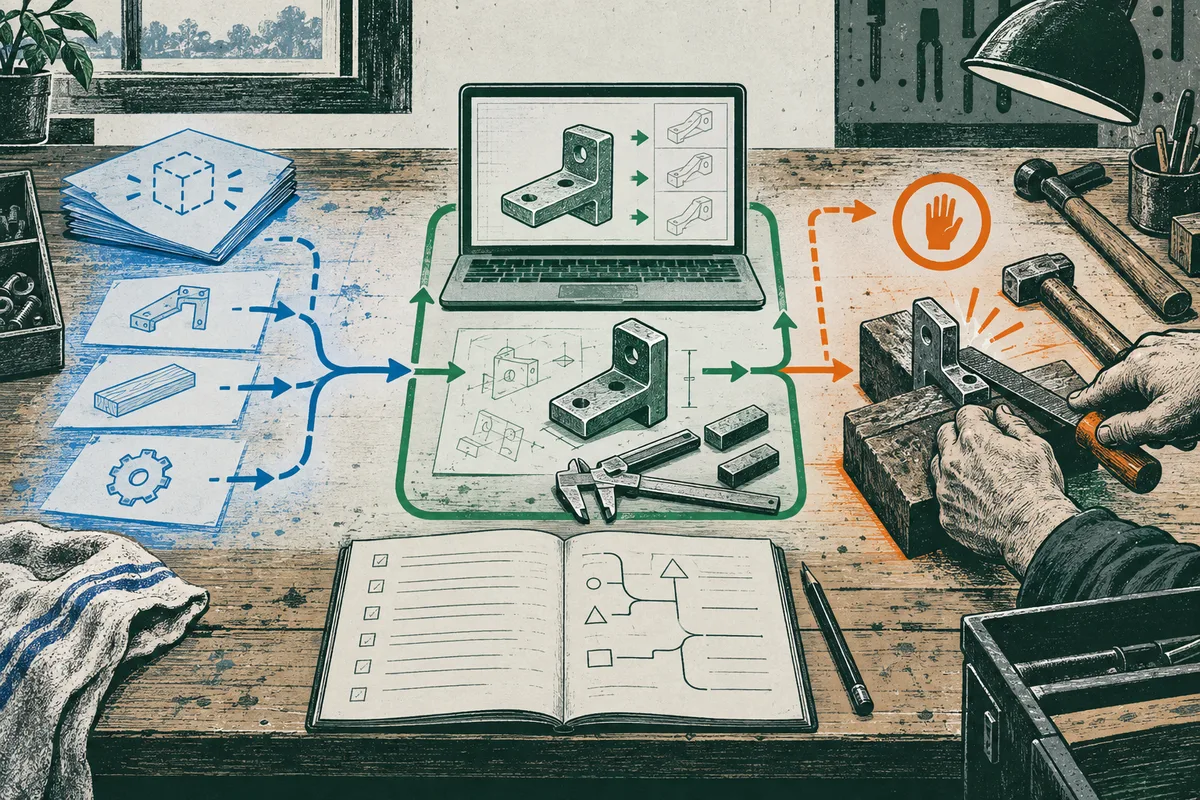
Stanford’s working paper examines whether access to generative AI helps final-year German IT apprentices complete tasks beyond their formal training, and whether they understand the work afterward. In a field experiment with 673 apprentices, AI access raised task scores, including on beyond-curriculum tasks, without reducing immediate comprehension. The study does not establish durable learning, independent workplace skill, employer adoption, or job outcomes.
What did the Stanford study actually examine?
The Stanford project asks whether generative AI helps apprentices perform tasks beyond their formal training, and whether immediate understanding keeps pace. Its October 7, 2026 working paper reports a field experiment with 673 final-year IT apprentices at 12 German vocational schools. They were training in application development or system integration through Germany’s dual vocational system, combining occupational training with vocational schooling. The project description says some apprentices received AI access while others completed the same tasks without internet or AI assistance. The working paper reports higher performance, including gains of 26–31 percentage points on tasks beyond the curriculum, without reduced immediate comprehension. This is evidence about what this group could do with AI . It does not show that AI teaches every worker new skills or that apprentices later performed advanced work independently. “Task expansion” means a wider range of tasks could be completed successfully with AI available. The study included work within the apprenticeship curriculum and harder occupation-specific tasks beyond it, described by the project overview as resembling software-engineer or IT-infrastructure-architect problem solving. The working paper reports no reduction in immediate comprehension. But “immediate” sets a clear boundary: the result does not establish what apprentices remembered months later, whether they could transfer knowledge to unfamiliar workplace problems, or whether employers adopted AI or reassigned work. a finished deliverable shows what a person-tool combination accomplished; it cannot by itself show what the person can explain, verify, or repeat unaided. Stanford’s project description frames the study around task range, comprehension, difficulty, interaction, and AI literacy; the working paper supplies the results, including beyond-curriculum gains. Together, they support a bounded conclusion about early-career IT apprentices, not all knowledge workers. Task performance is not a measure of job loss, hiring, wages, or economy-wide adoption. A practical takeaway is to assess AI-assisted performance and retained understanding separately: notice what the tool helps you complete, then check whether you can explain key decisions and handle a similar case without it.
Sources: Task Expansion with Generative AI: The Case of Apprenticeships — Stanford Digital Economy Lab project page; Task Expansion with Generative AI: Experimental Evidence on Middle-Skilled, Early-Career Workers — Stanford Digital Economy Lab working-paper page; Task Expansion with Generative AI: Experimental Evidence on Middle-Skilled, Early-Career Workers — full working paper
How did researchers define task expansion?
In the Stanford working paper, task expansion means that access to generative AI helped apprentices perform work beyond the formal scope of their training. The researchers did not define it as learning an entirely new occupation, receiving a credential, or proving readiness to work independently at a more advanced level. They compared performance on tasks tied to the apprenticeship curriculum with performance on deliberately more advanced tasks. The paper reports that AI access raised measured performance by 26–31 percentage points on tasks beyond apprentices’ formal training, which the authors interpret as direct evidence of AI-enabled task expansion. That is a result about what people could accomplish with the tool available in a structured experiment; it is not evidence that employers adopted the tasks or that the apprentices had mastered them unaided. The comparison depends on a practical boundary: what counts as “within” an apprentice’s training, and what lies beyond it? The sample comprised final-year IT apprentices in Germany’s dual vocational system, studying application development or system integration. The researchers used occupation-specific tasks that could be related to the formal curriculum and examination benchmarks. A curriculum-level task provided a reference point for work the apprentices were being trained to do. The harder tasks were designed to go past that reference point and resemble work associated with early-career software engineering or IT infrastructure architecture. For application development, the advanced work included subjects such as algorithms, software architecture, and machine learning; for system integration, it included subnet planning, security architecture, and hybrid-cloud migration. The study translated task performance into a score: the share of the maximum attainable points earned on each task. Researchers first gave participants a baseline task, then compared their results on three subsequent tasks, including curriculum-level and beyond-curriculum work. The Stanford working paper reports gains of 26–44 percentage points across those post-baseline task types, with the 26–31-point range applying to the tasks beyond formal training. The gains tended to be larger where participants without AI performed worst. On the hardest tasks, access also increased the likelihood that an apprentice attempted a substantive answer. This definition makes the finding useful without stretching it. A person in early-career technical work may be able to attempt a task outside their current training when an AI tool is available, and may produce a higher-scoring answer under those conditions. That is meaningful evidence of expanded task reach. It does not certify independent mastery, show that the worker can repeat the performance later without help, or establish that such tasks will become part of a job. For a worker considering an AI-supported task, the distinction is practical: record what the tool helped you complete, then separately ask whether you can explain the key choices and check the result. The experiment establishes the first kind of capability in its setting; it does not answer the second for every task or worker.
What did the experiment find about task performance?
Randomized access to ChatGPT Pro improved measured performance on all three post-baseline IT tasks. The Stanford working paper reports gains of 26–31 percentage points on tasks beyond the apprentices’ formal training. That is evidence of task expansion: access helped these participants perform work outside their curriculum. It does not show they independently mastered those advanced tasks, employers would assign such work, or workplace productivity rose by the same amount. An assisted score captures what a person and tool can produce together; job outcomes also depend on review, responsibility, and context.
The randomized comparison gives the finding more weight than a simple before-and-after demonstration. In the field experiment, 673 final-year IT apprentices at twelve German vocational schools were randomly assigned AI access for occupation-specific tasks. The Stanford project description says some completed the same tasks with generative AI tools while others worked without internet or AI assistance. Participants also completed an unaided baseline. This structure helps distinguish access effects from differences between people who choose to use AI and those who do not. The publication abstract reports substantial gains across task types, generally larger where unaided performance was lowest.
Tasks covered standard apprenticeship-level work and harder problems beyond the formal curriculum, described by Stanford as resembling software-engineer or IT-infrastructure-architect problem solving. The 26–31-point gains on beyond-curriculum tasks are consequential: AI access helped participants score better on work outside their training, not only familiar exercises. The paper calls its outcome productivity, but here the measure is performance on defined assessment tasks. It is not output per hour in a firm or proof that a learner could repeat advanced work alone. The results show what this group could accomplish with access under test conditions.
Random assignment supports a causal interpretation that AI access contributed to score differences in this setting. Yet the experiment did not assign employees new responsibilities, test employer decisions, or establish whether a manager would trust or use the resulting work. A higher score does not certify independent mastery later. A school assessment remains different from production work with real users, deadlines, and accountability. These boundaries define the result: a shift in task performance for a specific group, not a universal claim about training or employment.
For workers, the useful point is that AI access changed what these apprentices could produce, including on tasks beyond their formal curriculum. That is a capability finding, not a prediction about job loss, career advancement, or demand. It suggests a focused question for learning at work: when a tool helps you attempt an unfamiliar task, what can you verify, explain, and reproduce without it? The experiment does not answer that for an individual or another occupation. It shows why completion alone can miss a meaningful change: a learner’s task boundary may move while independent mastery and workplace use remain separate outcomes.
Did higher task scores come at the cost of comprehension?
The Stanford Digital Economy Lab working paper reports no reduction in apprentices’ immediate comprehension after they used AI on the task, with improvement on some task checks. That is a meaningful answer to the study’s learning question, but its time horizon matters: it does not show whether apprentices remembered the material weeks or months later, transferred it to a new problem, or could repeat the work independently. The result supports a narrow conclusion about comprehension measured soon after assisted performance, not a claim that AI either taught durable expertise or prevented it. The researchers measured comprehension separately from scored task output. After each post-treatment task, apprentices answered four questions about its content without AI. This gave the study two outcomes: how well the apprentice and tool combination completed the work, and what the apprentice could answer unaided immediately afterward. The paper reports no reduction in this immediate comprehension measure across tasks, and improvement on some checks. This matters because a strong deliverable alone cannot reveal how much its maker understood; follow-up questions add evidence beyond the work product. An immediate content check is a short-distance measure. It asks whether someone can answer questions about material they have just worked through. It does not test retention after time has passed, independent performance on a fresh task, or whether the learner can diagnose a failure when the original answer no longer fits. Nor does it measure debugging a live system, where context and consequences can change what counts as a sound decision. These are different outcomes, and the Stanford result should not be stretched to cover them. The finding that researchers detected no reduction is also not proof of exact equivalence between groups or complete mastery by every apprentice. A study can fail to detect a difference without establishing that none exists under other measures or at later dates. The result is encouraging because task scores rose without an observed short-run comprehension cost. It remains incomplete because short-run understanding and durable, independent capability are not interchangeable. A worker could understand the main ideas now yet need more practice to retain them; assisted work could also give someone useful exposure that later practice consolidates. The immediate quiz does not settle either possibility. For a worker applying this distinction, do not use the polish of an AI-assisted report, spreadsheet, or code change as a proxy for learning. After using a tool, try to explain one consequential choice in your own words, identify what evidence would make the answer wrong, or work through a comparable case without help. That is a practical self-check, not a validated test and not a finding from Stanford’s apprentice sample. The study supports saying that AI access expanded measured task performance in its setting without reducing immediate comprehension; it leaves longer-term retention and independent performance open. That is enough to take task expansion seriously while keeping the learning claim proportionate.
What role did AI literacy and interaction play?
The Stanford working paper reports generally larger treatment effects among apprentices with above-median AI literacy. That pattern suggests that access alone did not determine how much participants gained: the way a person can work with a tool may matter too. But the literacy measure was self-reported, and the subgroup comparison does not show that taking a particular course would cause a larger gain. Nor did treatment effects vary systematically with apprentices’ education before entering their apprenticeship. The result does not support a claim that more formal education produces greater benefit from AI.
The paper distinguishes practical ability to use AI effectively from understanding how AI works. Its subgroup result is stronger for reported effective use. That is a useful distinction for workers: knowing how to frame a task, supply relevant context and inspect an answer is different from knowing the technical details of the system. Yet a self-report can describe confidence or familiarity as well as skill, so it should not be treated as a tested credential or a recipe for training. The study did not compare courses, certificates or learning programs. Its result is an observed difference in treatment effects, not evidence that one educational purchase improves workplace outcomes.
Interaction records add detail to the result. In the working paper, apprentices most often pasted task material into ChatGPT. More intensive prompting and directly incorporating generated content were associated with higher task scores. These are descriptive relationships within the group given access, not randomized comparisons of prompting strategies. Apprentices who prompted more, or used more generated text, may also have differed in preparation, persistence or task approach. The evidence cannot isolate prompting intensity or copied output as the cause of higher scores. And a stronger submitted answer does not by itself show that its author understood or could reproduce the reasoning.
For learning at work, the practical implication is modest: effective tool use can support immediate task performance, while understanding and accountability need their own check. If you use AI to draft an analysis, plan a workflow or troubleshoot code, ask whether you can explain a consequential choice, verify the result against the underlying context and respond when a similar case changes. Those checks are a sensible personal practice, not outcomes tested by this study. A certificate or familiarity with a particular interface cannot stand in for domain knowledge and the ability to inspect work. Learn the workflow that matters to your actual task, then test what you can judge or explain without relying on the generated answer.
What did apprentices do with AI while solving the tasks?
The study looks beyond whether apprentices had access to AI: it also examines how they interacted with it while working. In *Task Expansion with Generative AI: Experimental Evidence on Middle-Skilled, Early-Career Workers*, the researchers describe using browser histories, timestamps and ChatGPT interaction logs to study those patterns. The paper reports that apprentices often pasted task material into ChatGPT. More intensive prompting and directly incorporating generated material were associated with higher task scores. These observations show that access was used in different ways.
The distinction between a tool being available and a workflow being designed to teach matters here. ChatGPT Pro was available during occupation-specific tasks; the intervention was not described as a dedicated tutoring program that systematically prompted apprentices to reason, explain each step or practice without help. After each task, apprentices answered comprehension questions without AI. That sequence offers a limited check on understanding immediately after assisted work, but it does not show that every interaction taught a durable skill or that the tool itself scaffolded learning. The same broad label of AI access can cover different amounts of learner judgment.
The causal strength also differs across the paper’s findings. Random assignment supports an estimate of the effect of access as offered in this trial: the researchers can compare the assigned AI-access group with the control group. Within the treatment group, however, apprentices were not separately assigned to prompt more, paste more context or incorporate a particular amount of generated text. Those behaviors were observed, not randomized strategies. A positive association between a behavior and a score therefore does not establish that the behavior caused the score difference. Those who already understood a task better might have been more able to direct the system or judge what to reuse. The logs help describe what happened during the experiment, but they cannot by themselves distinguish that explanation from the effect of a particular prompting habit.
For a workplace team, the practical lesson is to evaluate the workflow, not just count access or prompts. If AI is introduced into a learning task, useful follow-up would include whether the work is accurate and appropriate, and whether the learner can later explain a key choice or handle a similar problem without assistance. Those are useful questions, though this experiment did not answer them. The Stanford study provides evidence about performance and immediate comprehension in its apprentice setting; its interaction records offer clues about how participants used the tool, not a proven recipe for learning. A login, a long prompt or a polished deliverable should not stand in for evidence that someone can verify the result or transfer the underlying skill.
Why do other learning experiments report different effects?
Other experiments measure different learners, tasks and follow-up outcomes. Unrestricted answer provision has reduced later unaided performance in some settings, while scaffolded use can change that result. This complicates a universal verdict without invalidating Stanford’s apprentice result.
In the randomized field experiment “Generative AI without guardrails can harm learning: Evidence from high school mathematics,” nearly 1,000 students at a Turkish high school used either a GPT-4 chat tutor, a teacher-informed hint tutor, or no AI during math practice. Both AI groups did better while assistance was available: practice grades were 48% higher with the ordinary tutor and 127% higher with the hint tutor than in the control group. On a later closed-book exam, ordinary-tutor students scored 17% lower than controls, while the hint-tutor group’s result was statistically indistinguishable from the control. Students often requested and copied solutions with the ordinary tutor. So stronger assisted performance coexisted with weaker unaided performance, while assistance design mattered. It is not a direct test of vocational IT work: the learners, subject, tasks and exam differed, and the hint tutor used teacher-prepared guidance.
A smaller software-learning experiment raises a related concern. “How AI assistance impacts the formation of coding skills” randomized 52 mostly junior developers, familiar with Python but not the Trio library, to learn it with or without an AI coding assistant. On a quiz shortly after the coding task, the AI group averaged 50%, compared with 67% for the group coding by hand. AI users finished about two minutes faster on average, but that difference was not statistically significant. Participants used it in varied ways: some participants delegated code or debugging, while others asked conceptual questions or requested explanations. These patterns do not establish which interaction style caused better learning. The small sample and immediate quiz cannot establish what happens over months or in other work.
Stanford’s apprentice experiment differed in population, task and outcome: final-year vocational learners completed occupation-specific IT work, including tasks beyond their formal curriculum, then answered short unaided comprehension questions immediately afterward. The comparison studies tested later unaided math performance or short-term mastery of an unfamiliar coding library. Stanford’s finding of expanded task performance without a detected immediate comprehension decline does not establish whether AI support builds durable expertise. Differences in subject, prior familiarity, tool design, answer delegation and measurement can produce different results without any one study settling the question for every learner.
For a worker, ask whether the workflow leaves room to explain a consequential choice, check an output against real context, debug a failure or handle a similar case unaided. When independent judgment matters, a polished deliverable alone cannot show that the skill has been learned. A short verification step can reveal what needs practice. This is a task-specific learning check, not a job-loss prediction or, by itself, a reason for a costly career change.
Sources: Generative AI without guardrails can harm learning: Evidence from high school mathematics; How AI assistance impacts the formation of coding skills; Task Expansion with Generative AI: Experimental Evidence on Middle-Skilled, Early-Career Workers — full working paper
What does workplace evidence add—and what can it not settle?
Workplace evidence helps separate an assisted result from learning that remains when assistance is unavailable. It does not replace the Stanford apprenticeship experiment: the occupations, intervention, tasks and learning measures differ. In “Generative AI at Work,” researchers studied a conversational assistant introduced in stages among 5,172 customer-support agents at one firm. The assistant suggested replies during customer chats; agents remained responsible and could edit or ignore suggestions. This examines an implemented workplace tool, rather than access to ChatGPT during vocational-school tasks.
The paper reports that access increased issues resolved per hour by 15% on average. Effects varied: less-skilled and less-experienced agents gained more, while the most experienced and skilled workers saw small speed gains and some decline in conversation quality. These are outcomes in one customer-support operation, not a forecast about other occupations. Researchers also used software outages, when recommendations became unavailable, to examine whether gains persisted without the tool. Agents retained productivity gains relative to their pre-assistant baseline, which the authors interpret as evidence consistent with learning. This outage comparison differs from Stanford’s four immediate, unaided comprehension questions after each apprentice task; it does not measure long-term retention or prove every agent acquired transferable skill.
The studies answer complementary questions. Stanford randomized access for final-year German IT apprentices and found better performance on defined curriculum and beyond-curriculum tasks without a detected immediate comprehension decline. The customer-support study followed a workplace rollout and used operational performance, including outages, to investigate whether workers maintained gains when suggestions stopped. One shows expanded task performance in training; the other offers evidence that workplace assistance can coincide with retained performance. Differences in experience, task, tool, setting and outcome timing mean neither confirms the other or supports a single rule about AI and learning.
The authors of “Generative AI at Work” describe medium-run effects within one firm and say the study was not designed to establish aggregate employment or wage effects. Its productivity result cannot tell a worker whether employers will adopt similar systems, change hiring, increase demand, reduce staffing or raise pay. Nor does it estimate personal displacement odds. The International Labour Organization’s task-based exposure framework addresses a different question: occupational task exposure, not learning in either experiment or individual job-loss odds.
For a current role, keep task performance, retained understanding and labor-market outcomes separate. A faster AI-supported workflow may be useful, and workplace learning may occur, but neither fact alone resolves what happens to a particular job. When discussing an AI-supported workflow with a manager or mentor, ask: “Which decisions in this task should I be able to explain and verify if the assistant is unavailable?”
Sources: Generative AI at Work — CIRJE working paper; Generative AI at Work — Quarterly Journal of Economics; Generative AI and Jobs: A Refined Global Index of Occupational Exposure
What should a worker take from the study now?
Take the result as encouraging but bounded: in Stanford's field experiment, access to ChatGPT Pro widened measured task performance for 673 final-year German IT apprentices, including work beyond their curriculum, without a detected reduction in immediate comprehension. The working paper, “Task Expansion with Generative AI: Experimental Evidence on Middle-Skilled, Early-Career Workers,” does not show whether understanding lasted, transferred to workplace problems, or changed hiring, pay, or job security. The International Labour Organization's “Generative AI and Jobs: A Refined Global Index of Occupational Exposure” addresses occupational task exposure, not an individual's displacement risk.
Choose one recurring task where AI is available or under consideration. Note what the assisted output helps you complete, which context or risk needs your judgment, and whether you can explain a key decision or handle a similar case without the tool. This is a personal learning check, not a validated assessment or a Stanford finding. A polished deliverable alone cannot show what you retained. These results do not justify quitting, buying a degree, or retraining broadly; those choices depend on your goal and constraints. If you want to map change-pressure signals across your work, the free task checker can help; it does not estimate personal displacement probability. Ask a manager or mentor: “Which part of this AI-supported deliverable should I be able to verify independently?”
Sources: Task Expansion with Generative AI: Experimental Evidence on Middle-Skilled, Early-Career Workers — full working paper; Generative AI and Jobs: A Refined Global Index of Occupational Exposure
Questions readers ask
Does Stanford’s study show that AI helps apprentices learn?
It found higher task performance without reduced immediate comprehension among the apprentices studied. It did not measure months-long retention or independent performance on later workplace tasks, so it cannot establish durable learning.
Sources and notes
- Task Expansion with Generative AI: The Case of Apprenticeships — Stanford Digital Economy Lab project page
Defines the apprentice population, randomized school setting, task range, and comprehension questions.
- Task Expansion with Generative AI: Experimental Evidence on Middle-Skilled, Early-Career Workers — Stanford Digital Economy Lab working-paper page
Its abstract reports the sample, randomized AI access, task performance gains, and immediate comprehension finding.
- Task Expansion with Generative AI: Experimental Evidence on Middle-Skilled, Early-Career Workers — full working paper
Reports the field experiment, task score results, comprehension measure, AI-literacy analysis, and interaction patterns.
- Generative AI without guardrails can harm learning: Evidence from high school mathematics
Reports a Turkish high-school math experiment comparing ordinary GPT-4 access, a hint tutor, and no AI.
- How AI assistance impacts the formation of coding skills
Reports a randomized study of 52 developers learning an unfamiliar Python library and short-term mastery.
- Generative AI at Work — CIRJE working paper
Reports a staged workplace assistant rollout among customer-support agents and productivity and outage findings.
- Generative AI at Work — Quarterly Journal of Economics
Provides the published study record for workplace productivity, learning evidence, and stated limits.
- Generative AI and Jobs: A Refined Global Index of Occupational Exposure
Describes an occupational task-exposure framework and distinguishes exposure from likely job transformation.
Apply this to your own work
See the whole job market at once.
Explore which occupations AI may reshape, then turn the signal into a practical response.
Explore the job map