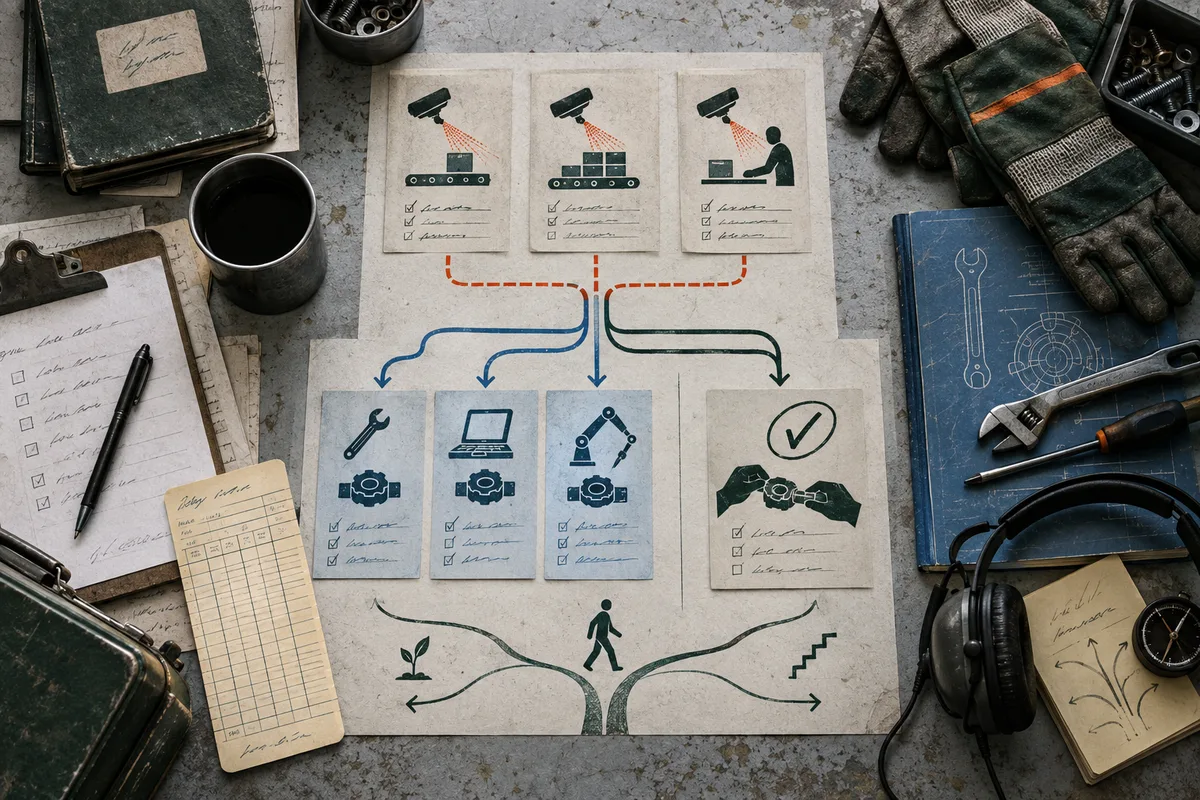
ILO Working Paper 170 adds a psychosocial health and governance lens to AI-at-work research, connecting surveillance, work design, autonomy, worker data, and protections. It is a synthesis and policy analysis, not a new prevalence estimate or causal test. Read it alongside evidence that distinguishes monitoring practices, then investigate what a specific task records, how the data are used, and whether workers can question or correct consequential decisions.
What did Working Paper 170 add to the question?
ILO Working Paper 170, published on 30 April 2026, adds a psychosocial health and governance lens to discussion of AI at work. Its central question is not simply whether a system can perform a task, but how AI-enabled systems may change work design, surveillance, discretion, and the handling of worker data. The ILO publication record describes that scope; the paper’s abstract argues that responses should connect labour and employment, equality and non-discrimination, occupational safety and health, and privacy and data protection. That is a framing and synthesis contribution, not a new count of monitored workers or a causal test showing that a particular system harms them. The paper itself says systematized knowledge about AI’s health impacts remains limited. Imagine a task dashboard that records response times: Working Paper 170 makes it relevant to ask how the measure is used, whether it narrows discretion, and what protections govern the data. Nor does the paper estimate whether a role will disappear. Its practical value is to help a worker inspect a real workflow and identify what evidence is still needed, rather than treating a broad concern as a personal risk score.
Sources: AI Systems at Work: A Changing Psychosocial Work Environment; AI Systems at Work: A Changing Psychosocial Work Environment
What kind of evidence does WP170 provide?
ILO Working Paper 170 is best read as a synthesis and policy analysis, not as a new representative survey of workers or a causal evaluation of workplace AI. It organizes existing research, occupational safety and health frameworks, and regulatory developments around a question often obscured by safety and productivity claims: how does work design affect mental and social well-being? The paper’s abstract says it examines those health impacts and argues for an integrated policy response spanning labor and employment, equality and non-discrimination, occupational safety and health, and privacy and data protection. This frames the problem; it does not measure how common any practice is. The paper is explicit about why it takes this route. In its introduction, “AI Systems at Work: A Changing Psychosocial Work Environment” says research on how AI is integrated into core employment matters, including working time, wages, and occupational safety and health, remains limited. It also describes systematized knowledge about AI-related health impacts as scarce, then focuses its review on emerging evidence and concerns about psychosocial risks rather than trying to inventory every benefit. The scope matters: the paper says it addresses psychosocial risks associated with AI technologies and does not address physical health and safety issues. It is not a complete assessment of AI’s workplace effects. Its organizing concept is useful because it moves the unit of attention from a technology label to conditions of work. The paper draws on an ILO definition of psychosocial hazards as aspects of work design or management that increase the risk of work-related stress. It connects that idea to matters such as work pace, job control, organizational conditions, and the worker’s ability to influence how work is done. From that perspective, surveillance is consequential not simply because data exist, but because collection and use may become part of supervision, evaluation, or work organization. The paper’s framework asks whether those arrangements affect discretion, privacy, or the conditions under which a task is performed. These are pathways to investigate, not findings about a particular employer or worker. This distinction sets the right evidentiary weight. A synthesis can bring scattered findings and legal questions into one account, make an overlooked mechanism easier to see, and show why several policy domains may need to connect. It cannot, by itself, tell us the prevalence of workplace surveillance, establish that a particular monitoring system caused stress, or predict what will happen to a job. Working Paper 170 discusses existing studies, standards, and policy developments; its broad scope should not be mistaken for a single empirical estimate. When citing it, describe the psychosocial mechanism or governance concern it identifies, and name any workplace-specific conclusion as a question for investigation rather than a result the paper measured. Its framework is context, not a score or forecast.
Sources: AI Systems at Work: A Changing Psychosocial Work Environment; AI Systems at Work: A Changing Psychosocial Work Environment
How does the psychosocial lens extend earlier work on algorithmic management?
The change is mainly one of emphasis and connection. The ILO’s 2022 background paper, The Algorithmic Management of Work and Its Implications in Different Contexts, defines algorithmic management as computer-programmed procedures used to coordinate labor input. It offers a conceptual framework for examining how this organization of work can shape job quality in digital labor platforms and regular workplaces. Its question is how algorithmic coordination fits into work organization and what implications follow. ILO Working Paper 170, AI Systems @ Work: A Changing Psychosocial Work Environment, takes up a neighboring but distinct question: how AI systems may change the mental and social conditions of work, including surveillance, autonomy, and data-driven management, and whether occupational safety and health approaches adequately address those concerns. It argues for an integrated policy response joining labor and employment, equality, occupational safety and health, and privacy and data protection. Read together, the papers connect work organization to an account of well-being and rights; the later paper does not measure harm caused by the practices the earlier framework describes.
The labels overlap without being synonyms. The JRC’s 2025 policy brief, Digital Monitoring, Algorithmic Management and the Platformisation of Work in the EU, makes the boundary explicit: algorithms used for management may be powered by AI or may not be. The brief describes digital monitoring as collecting and processing information through digital tools to influence or manage the people whose data are gathered. AI refers to systems that infer from inputs to generate outputs such as predictions, recommendations, or decisions. A worker can encounter digital monitoring without an AI system managing the work; software can allocate tasks through rules that are not AI; and an AI tool can help with a task without monitoring its user. These distinctions keep the psychosocial question focused on actual arrangements rather than technology labels.
The extension is useful as a policy and research lens, not as evidence that every algorithmically managed workplace creates psychosocial harm. Working Paper 170 connects decisions about work organization and data with possible effects on autonomy and well-being, then asks which protections apply. The 2022 framework helps identify the coordination practice; the psychosocial lens broadens what investigators should ask about it. For a specific task, establish what system collects information or directs work, what decision uses its output, and whether the worker can understand or question that decision. This is an application of the papers’ concepts, not a validated assessment or a finding about a particular employer. It also avoids assuming that all AI at work manages workers, or that every form of algorithmic management uses AI.
Sources: The Algorithmic Management of Work and Its Implications in Different Contexts; AI Systems at Work: A Changing Psychosocial Work Environment; Digital monitoring, algorithmic management and the platformisation of work in the EU: Data from the AIM-WORK survey
How can monitoring affect pace and worker autonomy?
A plausible route from monitoring to reduced autonomy runs through a sequence: data are collected, a manager or system treats a measure as relevant, and that measure influences pace or discretion. “AI Systems at Work: A Changing Psychosocial Work Environment” places workload, work pace, job control, and participation in work decisions among the psychosocial factors that matter. This is a work-design frame, not a finding that every dashboard harms workers. Consider a generic service task scored partly by response time or cases completed. A count can register speed while missing that one case needs more investigation, a quality check, or a pause to resolve ambiguity. If used only to spot bottlenecks, the measure may help a team see where time is going. If it becomes a performance target, a worker may have reason to shorten necessary checks or avoid a complex case, even when that conflicts with quality. That is a plausible mechanism, not an observed case or a claim that measurement inevitably becomes a target. The ILO paper describes emerging concerns about surveillance, work intensity, and autonomy, while stating that systematized knowledge about AI-related health impacts remains limited. Purpose, managerial use, task context, and the ability to correct an incomplete record therefore matter. The Joint Research Centre’s “Digital monitoring, algorithmic management and the platformisation of work in the EU: Data from the AIM-WORK survey” makes the categories more concrete. Its 2025 brief distinguishes activity monitoring, such as computer use, calls, or emails, from physical monitoring, such as location tracking through cameras, sensors, or GPS, and from time monitoring. It treats algorithmic management as a separate practice that can direct or evaluate work. The brief reports representative survey data for working-age people across EU Member States, but says evidence of deteriorating working conditions is nascent, avoidable, and far from generalized. A response-time dashboard, location device, and automated task allocation do not collect the same information or shape discretion in the same way. The brief does not establish that a particular measure causes a particular worker’s pace or autonomy to change. For one monitored task, compare the signal with the work’s quality requirements: what does the measure count, what context does it omit, and who can see that context? Ask whether it informs a conversation or drives allocation, evaluation, or pace; whether exceptions and necessary pauses can be recorded; and whether a worker can request an explanation or correction when a consequential interpretation is wrong. These questions do not diagnose harm or settle a legal issue. They turn the ILO’s psychosocial lens into a bounded inquiry about the task. If a metric captures speed while accountability still rests on careful judgment, raise the mismatch with a manager or worker representative, using a concrete example of omitted context. The evidence supports examining that mechanism; local information is needed to determine whether it operates in a given workplace.
Sources: AI Systems at Work: A Changing Psychosocial Work Environment; Digital monitoring, algorithmic management and the platformisation of work in the EU: Data from the AIM-WORK survey
What does the JRC comparison add that WP170 does not measure?
The JRC Working Paper 2026/07 adds a distinction that a broad account of workplace surveillance can miss: reported associations with job quality differ by kind of oversight. Its accessible abstract says the study draws on the AIM-WORK survey, examines ten forms of digital oversight among EU workers, and estimates associations with job-quality outcomes using ordered-logit models. It reports that physical tracking, including CCTV, wearable sensors, and GPS, is associated with reduced autonomy, work intensification, limited flexitime, and unsocial working hours. By contrast, digital activity monitoring has modest negative or neutral associations. Some physical-monitoring practices are more adverse when combined. This is differentiated association evidence, not a causal test of a particular device or a finding about every monitored workplace (“Not all digital monitoring is the same: Job quality outcomes and prevalence across the EU workforce”). That distinction matters because “monitoring” can refer to unlike activities. Tracking a worker’s location or movement is not the same as logging computer use, screens, keystrokes, documents, calls, or internet activity. The JRC abstract argues that treating monitoring as merely a data-collection layer of algorithmic management can obscure its independent relevance. Its reported physical-tracking associations held independently of algorithmic-management practices at the workplace. The authors warn that failing to distinguish observation of workers’ cognitive activity from tracking their bodies and movements risks misdiagnosis. A single category may therefore combine practices with different relationships to autonomy, pace, schedules, and discretion. The study makes the comparison more specific; it does not establish why every association occurs or which system feature is responsible. The JRC’s 2025 policy brief clarifies the categories, but does not provide a second test of those results. It defines digital monitoring as collecting and processing information through digital tools to influence or manage the people whose data are gathered. Algorithmic management means computer-programmed procedures used to coordinate labor, which may or may not use AI. The brief defines AI as a distinct kind of machine-based system. The terms overlap but cannot be substituted for one another: monitoring need not make management decisions, and algorithmic procedures need not use AI (“Digital monitoring, algorithmic management and the platformisation of work in the EU: Data from the AIM-WORK survey”). The 2025 brief says evidence of deteriorating working conditions exists in some cases but remains nascent, avoidable, and far from generalized. That is context, not replication of the 2026 analysis. There is an important access limit. The JRC 2026/07 record says the full document is visible only at Commission level, so the accessible evidence here is its abstract. It identifies the survey basis, oversight forms, method, and direction of associations, but does not provide enough detail to assess sample size, coefficients, uncertainty intervals, or subgroup estimates. The findings concern associations in an EU workforce context; they do not prove that physical tracking caused the outcomes, establish universal effects, or reveal how a particular employer’s system operates. For a worker inspecting one task, the practical question is concrete: is the tool tracking activity, physical location or movement, or both, and what workplace decision uses the data? The comparison narrows what to investigate; it does not answer the local question.
Sources: Not all digital monitoring is the same: Job quality outcomes and prevalence across the EU workforce; Digital monitoring, algorithmic management and the platformisation of work in the EU: Data from the AIM-WORK survey
Why should monitoring, management, and AI stay separate in the comparison?
The three terms describe different parts of a workplace system. Monitoring collects and processes information about work or workers. Algorithmic management uses computer-programmed procedures to coordinate labor, and those procedures may use AI or conventional rules. AI describes machine-based systems that infer from inputs to produce outputs such as predictions, recommendations, content, or decisions. A workplace practice can involve one, two, or all three, but the labels do not establish the others. The European Commission Joint Research Centre's 2025 science-for-policy brief defines monitoring by its data collection and management purpose, algorithmic management by coordination, and AI by how a system generates outputs. The distinctions keep separate questions from becoming one assumption.
The International Labour Organization's 2022 paper, The Algorithmic Management of Work and Its Implications in Different Contexts, defines algorithmic management as computer-programmed procedures coordinating labor input. Its framework examines implications from work organization to job quality; it does not claim that every procedure is AI. a rule-based roster can assign shifts without learning or inference. An AI writing assistant can generate a draft without monitoring its user or allocating work. These examples show how categories may overlap without being interchangeable.
Monitoring can provide information to managers, but collection alone does not show that software makes a decision. A digital activity log might record application use while a supervisor decides whether and how to act on it. If a system uses information to assign work, set pace, evaluate performance, or schedule shifts, algorithmic management may be involved. The JRC brief treats these functions separately from monitoring. Its 2026 Working Paper 2026/07 says that subsuming monitoring within algorithmic management can obscure differences between oversight practices. The public abstract reports associations across ten forms of worker oversight; it supports distinguishing categories, but does not tell a reader what a particular employer uses.
The separation prevents a chain of unsupported conclusions. Technical capability does not prove workplace use; use does not establish that a worker's task is monitored; monitoring does not prove an automated management decision follows. Identifying AI in a task also does not establish changed autonomy, pace, job quality, or employment. Each step needs evidence about the system's role and work arrangement. Before applying Working Paper 170's psychosocial lens, identify what information is collected, whether a procedure allocates or evaluates work, whether AI generates an output, and who acts on it. Then ask which decision that information can influence. Naming the mechanism gives a starting point for examining discretion and recourse, while leaving effects open to task-specific evidence.
Sources: The Algorithmic Management of Work and Its Implications in Different Contexts; Not all digital monitoring is the same: Job quality outcomes and prevalence across the EU workforce; Digital monitoring, algorithmic management and the platformisation of work in the EU: Data from the AIM-WORK survey
What counterevidence and design conditions keep the verdict proportionate?
The evidence does not support a universal harm claim, and it does not support a universal benefit claim either. The OECD’s *Algorithmic Management in the Workplace: New Evidence from an OECD Employer Survey* makes the distinction visible because its main survey asked more than 6,000 mid-level managers across France, Germany, Italy, Japan, Spain, and the United States about tools used to instruct, monitor, or evaluate workers. Fielded from June to August 2024, it records manager perceptions, not worker outcomes: 60% of managers said these tools improved their decision quality, while nearly two-thirds reported at least one trustworthiness concern, including unclear accountability, hard-to-follow logic, or inadequate protection of workers’ health. Those findings can coexist. Faster or more consistent decisions may help managers and potentially workers, while the same system can create risks that the manager survey cannot establish as experienced effects. The paper also explicitly separates this employer survey from the worker surveys and workplace case studies it reviews, so the two evidence streams should not be merged as if they asked the same people the same question. That review supplies a useful qualification to a simple harm narrative. In the worker evidence summarized by the OECD report, a survey of about 6,800 union members in customer service, telemarketing, and warehousing across Denmark, Sweden, Finland, and Norway associated algorithmic-management tools with lower autonomy, heavier workloads, lower trust and job satisfaction, and more stress. Yet the report says those associations were absent for autonomy, trust, and job satisfaction or motivation in workplaces where workers had substantial influence and were involved or consulted during implementation. This is evidence consistent with consultation as a potentially important condition, not proof that consultation alone caused the difference or guarantees a good outcome. The same review describes healthcare case studies in France and Italy where new tools were associated with better-organized workloads and lower pressure, alongside more mixed results in India and South Africa. Context and tool use matter; “digital management” is not one uniform intervention. EU-OSHA’s 2024 report, *Digital Technologies at Work and Psychosocial Risks: Evidence and Implications for Occupational Safety and Health*, places AI worker management alongside four other technology categories, including task automation, smart digital systems, platforms, and remote-work technologies. Its scope shows that psychosocial risk was already being considered across changing work design; WP170’s added value is to connect that concern more directly to an integrated labor, equality, safety, privacy, and data-protection frame. Together, these sources suggest practical conditions to inspect—clear purpose, fit between a measure and the task, worker understanding and voice, and a way to question or correct consequential decisions. They do not establish that any one safeguard prevents harm. A proportionate judgment therefore asks both what the tool may improve and what it changes in pace, discretion, workload, and recourse, using evidence from workers as well as managers where available.
Sources: Algorithmic Management in the Workplace: New Evidence from an OECD Employer Survey; Digital Technologies at Work and Psychosocial Risks: Evidence and Implications for Occupational Safety and Health; AI Systems at Work: A Changing Psychosocial Work Environment
What does this evidence not say about jobs or displacement?
Working Paper 170 and monitoring studies address how work is organized and experienced. They do not calculate an individual worker’s probability of losing a job. Capability, employer use, task redesign, labor demand, and displacement are separate claims; evidence for one does not establish the next. A finding about autonomy or pace is not a displacement forecast,. The International Labour Organization’s June 2026 research brief, “The impact of GenAI on jobs, productivity and work organization: a review of the empirical evidence,” helps set this boundary because it treats outcomes separately. Drawing on experiments, firm data, platform studies, and worker surveys across several countries, The brief reports productivity gains as real but uneven and often unverified; large-scale displacement remains limited, while reported time savings have not yet translated into higher measured output, earnings, or employment. It also identifies work organization, autonomy, and job quality as concerns. These are emerging, mixed results, not a promise about every occupation or country; the review does not test surveillance’s psychosocial effects. That distinction clarifies Working Paper 170’s contribution. “AI Systems at Work: A Changing Psychosocial Work Environment” examines mental and social well-being, including surveillance, autonomy, and data use, and argues for an integrated policy response. It says systematized knowledge about health impacts remains limited and organizes governance questions rather than measuring monitoring prevalence or job losses. A work-design mechanism can matter without a position disappearing: a worker may face less discretion, faster pacing, or difficulty correcting a misleading metric while remaining employed. Conversely, an association between monitoring and poorer job-quality measures cannot alone establish causation or an employment effect. The Joint Research Centre’s “Not all digital monitoring is the same” adds a distinction using the AIM-WORK survey and ordered-logit models to examine ten oversight forms in the EU. Its accessible abstract associates physical tracking, including CCTV, wearable sensors, and GPS, with reduced autonomy, work intensification, limited flexitime, and unsocial hours. Digital activity monitoring’s associations are described as modestly negative or neutral. The full paper is restricted, so the abstract cannot support detailed estimates or claims about a particular workplace. They concern job-quality associations, not job losses, causal effects, or universal outcomes. For a worker, use this evidence to investigate one concrete task before drawing career conclusions. Ask what information a tool collects, who uses it and for what decision, whether its measure captures the work’s quality and context, and how a worker can request an explanation or correction. Such questions can reveal changes in pace or discretion even when employment is stable. If the concern is whether AI may alter tasks or demand for a role, that requires separate task and labor-market evidence. Neither monitoring exposure nor AI capability answers it alone. Use Working Paper 170 to identify psychosocial and governance questions; do not turn those questions into a personal job-loss forecast.
Sources: The impact of GenAI on jobs, productivity and work organization: a review of the empirical evidence; AI Systems at Work: A Changing Psychosocial Work Environment; Not all digital monitoring is the same: Job quality outcomes and prevalence across the EU workforce
What should a worker check next in one monitored task?
Inspect one monitored task before deciding what it means for your work or career. Working Paper 170 supplies questions about psychosocial work design and governance; it does not diagnose a particular workplace. The JRC paper, “Not all digital monitoring is the same,” adds EU survey associations that vary by monitoring form, but its abstract cannot tell you what a specific dashboard is doing. They prompt inquiry, not verdicts about an employer or occupation. Start by naming the task and system: for example, handling customer requests while a response-time dashboard is visible. Note what is recorded, such as activity, location, or a manager’s allocation decision, and the stated purpose. These categories can overlap without meaning the same thing. A work-activity log is not automatically an AI system; data collection alone does not show that software makes a management decision. The distinction matters because tracking, automated evaluation, and task assignment raise different questions. Compare the metric with the work it represents. Does a response-time count include cases needing research or a quality check? Can a worker pause, handle an exception, or correct a record that misses context? These are questions, not assumed defects. The ILO paper identifies workload, pace, job control, and participation in work decisions as relevant psychosocial factors. The JRC abstract reports that, in its EU AIM-WORK analysis, physical tracking such as CCTV, wearables, and GPS was associated with poorer job-quality outcomes, while digital activity monitoring showed modest negative or neutral associations. This difference makes identifying the practice important; it does not establish a causal effect in your setting. Then ask through an appropriate workplace channel: “What data from this task are used in decisions, and how can I review or correct an interpretation that lacks context?” Note what remains unknown before drawing conclusions. The practical sequence is task, data, purpose, effect on pace or discretion, and route to explanation or correction. If the remaining question is which tasks face change pressure, the free task checker can help organize that separate inquiry; its signals are not a validated probability of displacement. The verdict is bounded. Working Paper 170 adds a psychosocial and governance lens; the JRC analysis differentiates monitoring forms through reported associations. Together they support task-specific questions, while leaving individual workplace effects and career outcomes unresolved. Better causal or longitudinal evidence, alongside clear information about local implementation, could change the assessment. Gather those details before making a larger career decision.
Sources: AI Systems at Work: A Changing Psychosocial Work Environment; Not all digital monitoring is the same: Job quality outcomes and prevalence across the EU workforce
Sources and notes
- AI Systems at Work: A Changing Psychosocial Work Environment
The official ILO record identifies Working Paper 170, its publication date, scope, and integrated policy argument.
- AI Systems at Work: A Changing Psychosocial Work Environment
The full paper describes evidence limits and frames psychosocial risks through work design and management.
- The Algorithmic Management of Work and Its Implications in Different Contexts
The ILO background paper provides a conceptual framework for algorithmic management across work contexts.
- Not all digital monitoring is the same: Job quality outcomes and prevalence across the EU workforce
The accessible JRC abstract reports AIM-WORK analysis and associations that differ by monitoring form.
- Digital monitoring, algorithmic management and the platformisation of work in the EU: Data from the AIM-WORK survey
The JRC brief distinguishes digital monitoring, algorithmic management, and AI, and describes limits in the evidence.
- Algorithmic Management in the Workplace: New Evidence from an OECD Employer Survey
The OECD report distinguishes manager survey findings from worker-side research and describes mixed outcomes.
- Digital Technologies at Work and Psychosocial Risks: Evidence and Implications for Occupational Safety and Health
The EU-OSHA report record establishes its scope across psychosocial risks and workplace technologies.
- The impact of GenAI on jobs, productivity and work organization: a review of the empirical evidence
The ILO brief treats productivity, employment, and work organization as distinct evidence questions.
Apply this to your own work
See the whole job market at once.
Explore which occupations AI may reshape, then turn the signal into a practical response.
Explore the job map