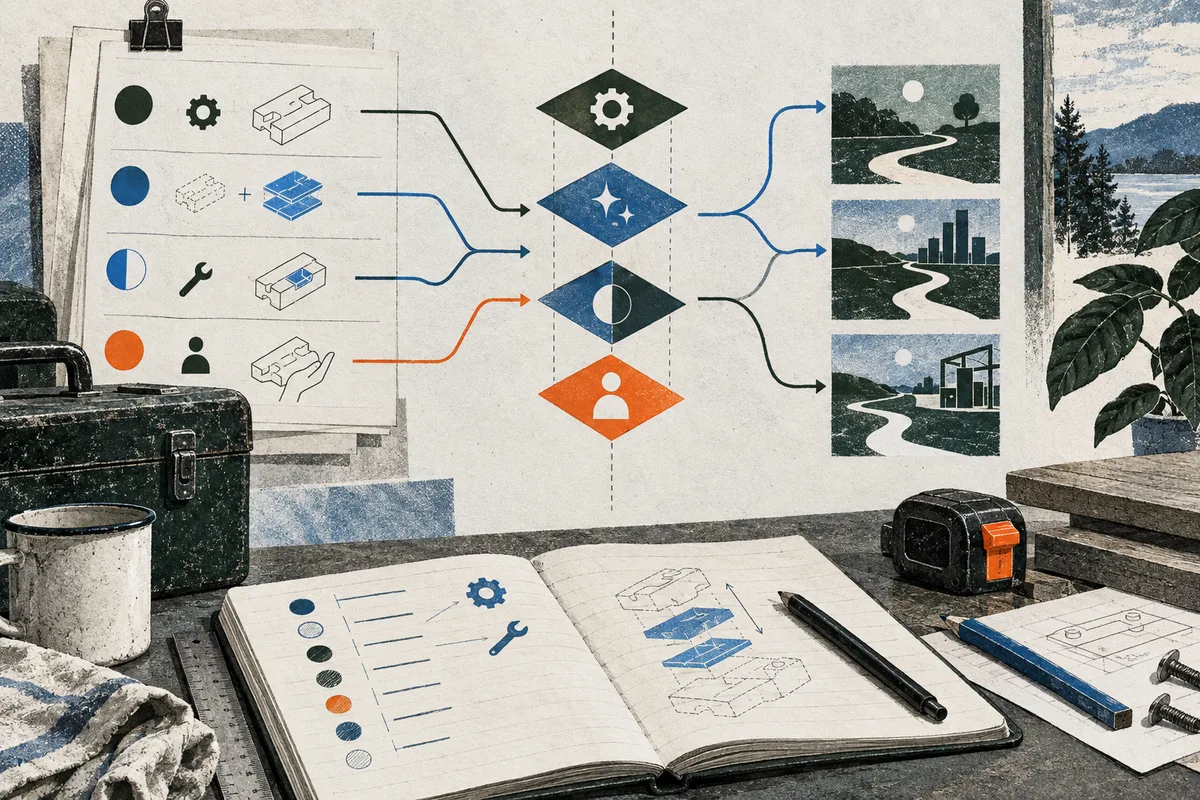
Worker consultation changes the AI decision from a technical purchase into a work-design decision. A meaningful process can alter which tasks are automated, which remain with people, how output is checked, what worker data is collected, how performance is measured, what training is provided, and what happens when the system is wrong. It can also surface redeployment or job-redesign options before a new workflow is fixed. It does not automatically give an individual worker a veto, guarantee continued employment, or prove that a job will be eliminated. The legal effect depends on your country, employment status, collective agreement, workplace representation and the purpose of the system. The practical test is simple: can workers see enough of the proposal to challenge its assumptions, suggest alternatives, and receive a reasoned response before important choices are locked in?
Consultation is a work-design lever, not a prediction about your job
When an employer says it is introducing AI, the phrase can describe very different changes. A drafting assistant that proposes replies, a forecasting tool that recommends staffing, and a monitoring system that scores pace are not the same intervention. They differ in what the system can do, how reliably it does it, whether managers adopt its output, and how much authority remains with a person. Consultation matters because those choices shape the job more directly than the label AI does.
The International Labour Organization's 2024 global report separates potential exposure from the employment result. It describes research about tasks that generative AI might affect, then notes that actual outcomes also depend on how employers integrate the technology and whether they retain humans to perform or oversee parts of the work. That is the evidence boundary for a worker: an exposed task is a reason to inspect the workflow, not a redundancy notice or a personal job-loss probability.
A useful consultation asks what problem the employer is solving and what will change in the task bundle. Will the system prepare a first draft, rank cases, route work, recommend a decision, or make the decision? What evidence will a worker be expected to check? Will the time saved become room for more complex cases, or will it become a higher quota? Will a manager treat a recommendation as optional, or as an unexplained target? These questions turn an abstract technology announcement into observable work.
In the EU, the AI Act adds a specific information duty for employers using high-risk AI systems at the workplace: before use, affected workers and their representatives must be informed that they will be subject to the system, where applicable under the relevant EU and national rules. The Act also requires providers and deployers to take measures to support staff AI literacy, taking account of the system's context and the people affected. Those provisions are important, but they are not a universal global consultation rule and they do not turn every workplace AI tool into a high-risk system.
So the first practical move is to resist the question, ‘Will AI replace my job?’ Ask instead, ‘Which parts of my current work will be changed, and who will control the change?’ Consultation is valuable precisely because it can affect that answer while the workflow is still being designed.
What a meaningful consultation can change
A consultation has leverage when it happens before procurement, configuration and performance targets are treated as settled. The employer may still make the final decision, depending on the legal and industrial-relations setting, but the proposal should remain open enough for information from the work itself to change it. The UK Acas guidance describes consultation as talking and listening about organisational changes, with the aim of finding a solution or reaching agreement. It distinguishes consultation from collective bargaining, where the parties take responsibility for an agreement. That distinction prevents two common errors: treating a meeting as meaningless because management retains a decision role, or treating consultation as a guaranteed veto.
The first area is scope. Workers can ask for a narrower use case, a time-limited pilot, or a rule that the system may assist with low-consequence preparation but may not make a final decision. A support tool that produces a draft for review creates a different accountability structure from a system that silently rejects an application or determines a worker's schedule.
The second area is task allocation. People who perform the work can identify exceptions, handoffs and hidden steps that a process map misses. They can say which cases are routine, which require context, and which should be escalated immediately. That can lead to a split between automated preparation, human verification, specialist judgment and an appeal route. The result may be augmentation, partial automation or a decision to postpone deployment. None of these outcomes can be assumed in advance.
The third area is measurement. Consultation can question whether speed, acceptance of a recommendation, error counts or customer outcomes are the right indicators. If an assistant reduces drafting time but increases checking time, a simple output quota may reward unsafe behaviour. If a monitoring system counts keystrokes, active windows or response time, workers can ask whether those measures represent useful work and whether they create pressure to work without sensible pauses. EU-OSHA identifies increased work intensity, reduced autonomy, opacity and loss of worker power as occupational-safety and health concerns associated with AI-based worker management.
The fourth area is safeguards. A workable proposal should identify access permissions, data minimisation, logging, human review, correction, incident reporting, stop rules and periodic evaluation. The ILO's 2025 working paper on social dialogue specifically points to purpose, design, worker-data privacy and feedback mechanisms as subjects for discussion from design through deployment.
Finally, consultation can change the transition offer. It can put paid training, protected learning time, revised responsibilities, redeployment consideration or a review date into the plan. A course alone does not preserve a role. A better question is what capability the changed workflow needs, how a worker can practise it on real work, and who will verify that the new arrangement is safe and useful.
A worked example: an AI assistant in customer operations
Imagine a customer-operations team told that a new system will summarise incoming cases, suggest replies and rank cases by urgency. The announcement sounds like a productivity improvement, but it leaves several work decisions unanswered. A consultation can make those decisions visible and negotiable.
Start with the task ledger. Case intake includes reading the customer's account, identifying the request, checking policy, recognising an exception, drafting a response, recording the action and deciding whether escalation is needed. The proposed system may be applicable to summarisation and first-draft writing. It may be less dependable at recognising a rare exception, interpreting an incomplete account, or deciding whether a distressed customer needs a human response. Those are not claims that the system can never do these things. They are reasons to test them against the actual workflow and define who checks them.
Now compare three rollout designs. In the first, the system drafts and summarises, while the worker remains responsible for checking facts and choosing the response. The consultation should ask for visible source records, a way to edit the draft, time in the schedule for verification, and a rule that draft acceptance is not itself a performance target. The job may gain a new quality-control task even as routine writing becomes faster.
In the second design, the system ranks cases and managers use the ranking to distribute work. Workers can ask how urgency is defined, what data feeds the ranking, how language or accessibility differences affect it, and how to correct a bad priority. They can request an audit of missed urgent cases and an escalation path that does not punish someone for overriding the recommendation. The issue is not whether an algorithm is biased in the abstract. It is whether this particular ranking rule changes who waits, who receives difficult work and who carries accountability.
In the third design, the system produces a quality score from transcripts and the score affects coaching, scheduling or discipline. This is a different level of risk. Consultation should cover notice, permitted uses, retention, access, contestability, human review and whether the score will be treated as evidence or as a final judgment. EU-OSHA's research on AI worker management recommends worker involvement in design, implementation, use and evaluation, together with periodic assessment because systems and their effects can change over time.
The consultation may not stop the employer from buying the product. It can still produce a materially different job: fewer routine drafts, more verification, clearer escalation, better records, protected training and a review after the pilot. If the employer rejects every safeguard and turns an uncertain recommendation into a quota, the process has also generated useful information. It tells workers that the main change pressure is not only the tool's capability. It is the management choice about authority, pace and evidence.
What consultation cannot promise
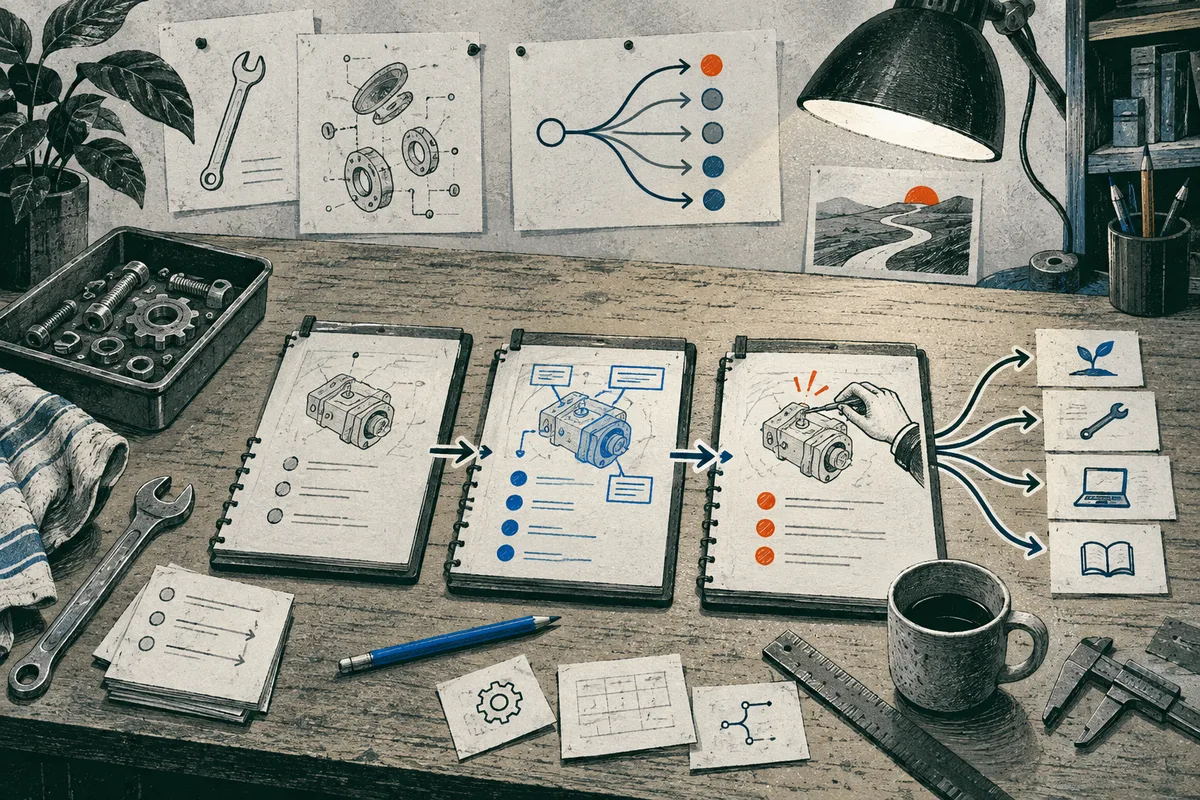
Consultation is often discussed as if it sits halfway between a suggestion box and a veto. In practice, its force depends on the legal framework, the employer's policy, the recognised union or works council, the employment contract and the subject being changed. Acas notes that consultation can be good practice or a legal requirement in particular circumstances, and that the decision-making responsibility remains with the employer when the process is consultation rather than collective bargaining. Other countries use different terms and give representatives different powers.
That means a global worker guide cannot tell you that your employer must consult in exactly one way. If the proposal changes contractual terms, creates a redundancy process, affects health and safety, uses personal data, or makes decisions about workers, separate rights may apply. Check the applicable law, collective agreement, employee handbook and representative structure. If the meeting concerns a disciplinary, dismissal or high-stakes employment decision, consider getting advice from a qualified local adviser or your union. This is a boundary of the article, not a reason to abandon the work-design questions.
Consultation also cannot establish that a job is safe because workers were heard. A well-run discussion may improve the system while the employer reduces headcount for other business reasons. Conversely, high task exposure may lead to redesign, new demand or a shift in responsibilities rather than immediate job loss. The ILO's evidence describes these outcomes as shaped by adoption, integration and human oversight. Exposure, use, employer adoption, demand and displacement remain separate signals.
Nor can consultation guarantee that training will lead to a promotion or a new occupation. A short course may help someone understand a tool, but workplace capability also requires practice, feedback, domain knowledge and evidence that the person can handle exceptions. A degree may be sensible for a planned profession with a credential requirement, but excessive for a worker whose immediate goal is to redesign one workflow. The right learning response follows the changed task, not the loudest technology label.
The strongest exception to the optimistic case is a consultation held after the vendor, targets, staffing plan and disciplinary uses are already fixed. Workers may still identify hazards and document objections, but their influence is narrower. The lesson is to participate early, request the proposal in writing and ask when feedback can still change the design.
How to participate without becoming an AI specialist
You do not need to become a machine-learning engineer to contribute useful evidence. Your advantage is knowledge of the work's inputs, exceptions, consequences and informal controls. Prepare a one-page task map with five columns: task, proposed system action, human decision, possible failure, and consequence if wrong. Add time pressure, sensitive data and people affected where relevant. This makes your contribution concrete and gives representatives something they can use collectively.
Ask for the information needed to test the proposal. What is the system intended to do? What data does it use? What output will workers see? Who can override it? What is recorded? How are errors reported and corrected? Will outputs be used for allocation, performance assessment, pay, promotion or discipline? What training and paid practice time are included? When will the pilot be reviewed, and what evidence would pause or change it? If the employer cannot answer, that uncertainty is itself an implementation issue.
Then make requests in proportion to the task. For a low-consequence drafting assistant, ask for approved data handling, a checking checklist, examples of failure and a small pilot. For a tool that ranks cases, schedules people or evaluates performance, ask for representative access to information, a human override, an appeal route, limits on secondary use, impact review and regular worker feedback. For safety-critical work, the threshold for testing, supervision and stopping should be higher because the consequence of error is higher.
Build durable capability alongside the consultation. Learn enough about the system's purpose, common failure modes, data boundaries and evaluation measures to question its output. Practise documenting an error and explaining why it matters to a customer, colleague or control process. Strengthen the domain skill that remains accountable: investigation, verification, prioritisation, negotiation, compliance judgment or relationship management. Tool interfaces may change quickly; these habits transfer across vendors.
If you are represented, share patterns rather than only personal anxiety. Several workers may notice that the proposed metric ignores invisible preparation, that edge cases are being routed to the same people, or that training is scheduled outside paid hours. A collective record makes the issue easier to test and harder to dismiss as an isolated preference. EU-OSHA and ILO materials both treat worker participation as relevant to design, implementation and ongoing evaluation, not a one-time announcement.
The realistic next move: document, test, then choose your path
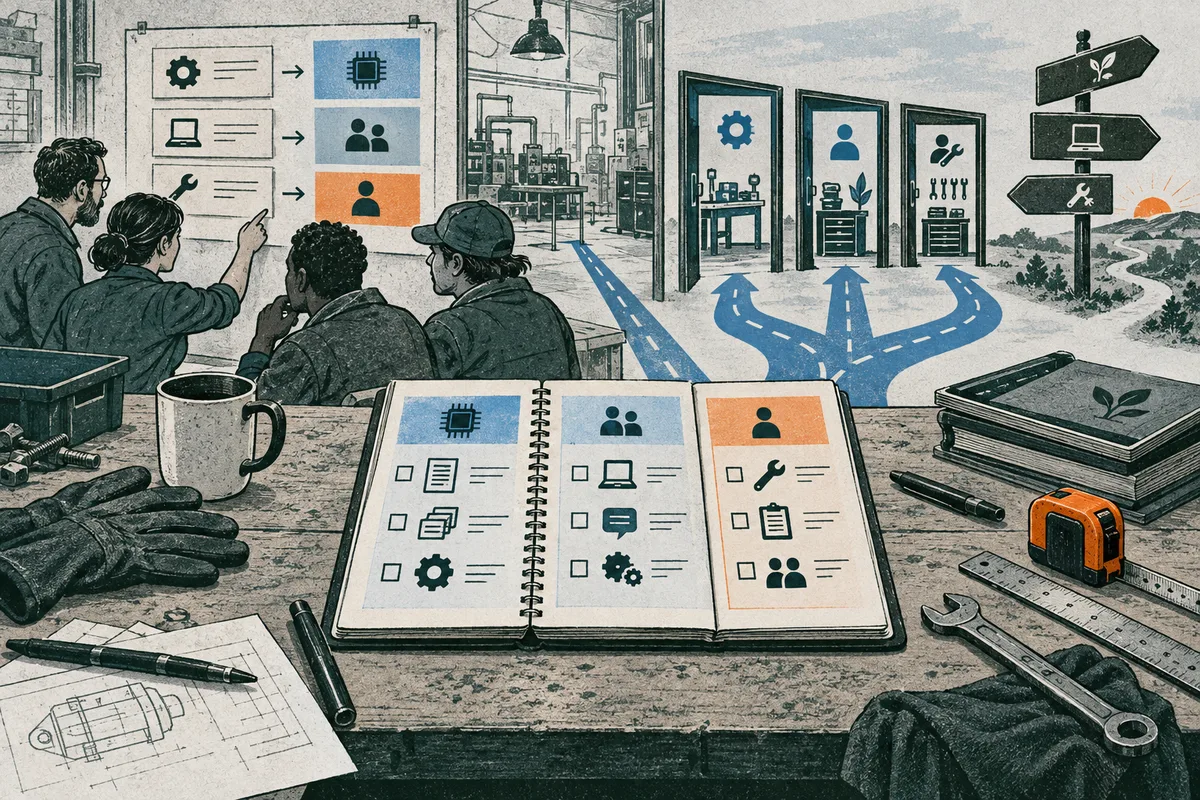
After consultation, separate what you learned into three lists. The first is confirmed change: tasks the employer has committed to alter, measures it will use, and decisions the system will influence. The second is an open question: claims still awaiting a pilot, data, training plan or legal review. The third is your personal exposure: which parts of your experience become more valuable, which routine outputs may be compressed, and which adjacent responsibilities you could credibly take on.
Your career response can be proportionate. An upgrade path keeps your field and adds workflow ownership, verification, process improvement or AI governance tasks. An adjacent path uses your domain knowledge in a nearby role where the changed task bundle fits better, such as moving from case handling into quality, escalation, implementation or operations analysis. A larger change makes sense only when the first two paths do not fit your constraints or the direction of your workplace. Compare each option against salary floor, location, training time, cost, health, family responsibilities, credential requirements and evidence you can build within a bounded period.
A sensible first week is modest. Save the announcement and any written proposal. Map five recurring tasks. Ask one representative or manager when feedback can still change the design. Request the system's intended uses, data practices, review rules and training plan. Choose one low-risk way to practise the capability the revised workflow needs, using work you are allowed to use. At the end of the week, you should have better questions and a clearer baseline, not a dramatic career verdict.
The free AI Proof Work task checker can help you organise that baseline into transparent task-level change-pressure signals and first actions. Its result is not a validated probability of displacement. If the consultation reveals several plausible routes, the paid career roadmap can compare a stay-and-redesign path, adjacent pivots and a larger-change scenario against your experience, income floor, geography, learning time and constraints, then turn the selected direction into a 30/60/90-day plan. It does not guarantee employment, income or a career immune to AI.
The decision point is not whether to panic or ignore the announcement. It is whether the proposed change gives you enough evidence to act. If the answer is no, your next move is to document the missing information and seek representation. If the answer is yes, test the changed tasks, protect the human-accountable work, and build the smallest capability that expands your options.
Questions readers ask
Does worker consultation mean employees can stop an AI rollout?
Not automatically. Consultation is usually a two-way process in which the employer considers views and responds; whether workers or representatives have approval, bargaining or veto rights depends on local law, contracts and collective arrangements. Its practical value is that it can change scope, safeguards, metrics, training and review before the rollout is fixed.
What should workers ask when AI is introduced into their job?
Ask what the system does, what data it uses, whose work it affects, which decisions it informs, what a human must verify, how errors can be corrected, whether outputs affect performance management, what training is paid, and when the system will be reviewed. Ask for written answers where possible.
Is consultation required before every workplace AI tool is used?
There is no single worldwide rule. Requirements can depend on the country, the system's purpose, the affected workers, health and safety duties, data-protection rules, employment changes and collective agreements. In the EU, the AI Act includes information duties for employers using high-risk AI systems at the workplace, alongside existing national and EU worker-information rules.
How is consultation different from collective bargaining?
Consultation involves sharing information, hearing views and considering responses, while decision responsibility generally remains with the employer. Collective bargaining is negotiation between an employer and a recognised union that can result in an agreement both sides are responsible for carrying out. The exact legal meaning varies by jurisdiction.
What if my employer says the AI system is only an assistant?
Look at its actual use, not the label. An assistant that drafts text for a worker to verify changes one task. An assistant whose recommendations determine queue priority, targets, discipline or access to work changes the control and accountability structure. Ask what happens when a worker disagrees with its output and whether that disagreement is recorded or penalised.
What should I do personally after an AI consultation?
Document the confirmed changes and open questions, map the tasks in your role, and identify one capability that the revised workflow needs. Start with a small, permitted practice project or pilot contribution. Choose an upgrade, adjacent or larger-change path only after comparing it with your income, location, learning time, health and family constraints.
Sources and notes
- Directive 2002/14/EC: informing and consulting employees
Supports the EU framework for information and consultation about employment and substantial work-organisation changes, including the distinction between information, consultation and agreement.
- Regulation (EU) 2024/1689, Artificial Intelligence Act
Supports the EU AI literacy duty and the workplace information requirement for affected workers and representatives when employers use high-risk AI systems.
- EU-OSHA: Artificial intelligence for worker management
Supports the evidence on work intensity, autonomy, transparency, worker participation, training, human control and periodic assessment of AI worker-management systems.
- ILO: Global case studies of social dialogue on AI and algorithmic management
Supports the cross-country evidence that worker representatives can influence AI-related employment, skills, management and working-condition decisions, with effectiveness depending on voice and power.
- United Nations and ILO: Mind the AI Divide
Supports the distinction between task exposure and job-loss outcomes, and the role of adoption, human oversight, social dialogue, training and redeployment in workplace AI transitions.
- Acas: What consultation is
Supports the practical definition of consultation as talking and listening, its possible legal and good-practice forms, and its difference from collective bargaining.
Apply this to your own work
See the whole job market at once.
Explore which occupations AI may reshape, then turn the signal into a practical response.
Explore the job map